
Bilawal Bhutto Zardari: Pakistan's Voice in a Time of Crisis
Bilawal Bhutto has presented a consistent, coherent narrative that effectively balances firmness regarding Pakistan's sovereignty with openness to diplomatic resolution.
By Sania Kamran
May 10, 2025
In the wake of India's recent aerial assault on Pakistani territory, a crucial question emerges: Who is most effectively representing Pakistan's interests on the global stage? The answer, somewhat surprisingly, is not found within the ranks of the current administration but in the person of Bilawal Bhutto Zardari, Chairman of the Pakistan Peoples Party and former Foreign Minister.
As tensions between the nuclear neighbors escalate following strikes that reportedly killed civilians, including women and children, Bilawal Bhutto has demonstrated exceptional diplomatic prowess across multiple international media platforms. His articulate defense of Pakistan's position, combined with his measured calls for de-escalation, offers a master class in crisis communication that current government officials would do well to study—or better yet, actively incorporate.
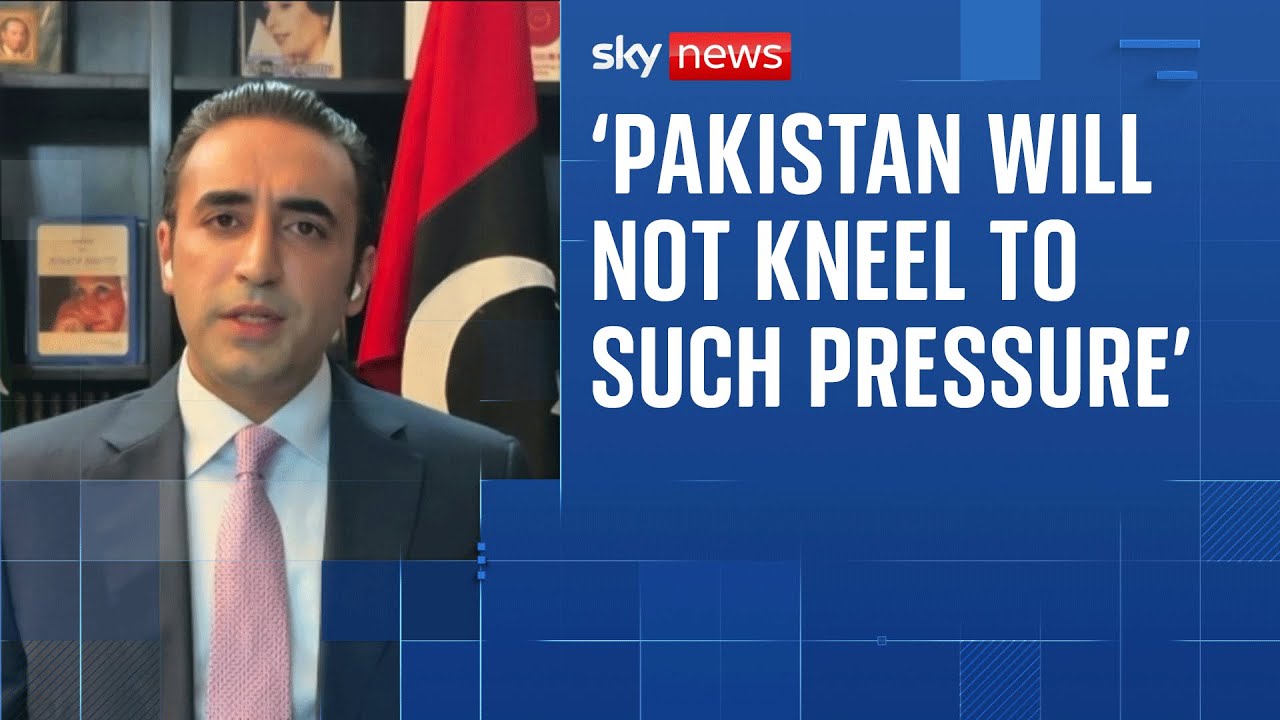
In recent days, Bilawal Bhutto has conducted a series of high-profile interviews with major international news organizations including Al Jazeera, Sky News, BBC, and Deutsche Welle. In each appearance, he has presented a consistent, coherent narrative that effectively balances firmness regarding Pakistan's sovereignty with openness to diplomatic resolution.
"What choice does Pakistan have? Innocent civilians have been killed. Our sovereignty has been violated," he stated during his interview with Al Jazeera's Osama Bin Javaid. "We've never pursued the path to conflict. But India is making it very difficult. And they're once again threatening the peace and stability in all of South Asia."
This statement exemplifies Bilawal Bhutto's diplomatic approach—acknowledging the severity of the situation while simultaneously placing Pakistan on moral high ground as the party seeking peace despite provocation. The clarity and conviction with which he delivers these messages stands in stark contrast to the often reactive or defensive posturing that has characterized official government communications during this crisis.
Perhaps most impressive is Bilawal Bhutto's strategic approach to countering India's allegations. Rather than simply issuing blanket denials, he systematically deconstructs India's claims with pointed questions that expose logical inconsistencies in their position.
"If there was indeed any such terrorist camp, then why did India reject Pakistan's proposal for an international, impartial investigation into the incident?" he asked in his Al Jazeera interview. "Why did they not wait for the international journalists who were in the process of visiting these alleged sites before attacking and targeting innocent civilians?"
To Sky News, he was even more direct: "This is absolute fiction. It has been rebuffed. Fake news. India has manufactured a lie of a baseless accusation against Pakistan." This combination of clear denial followed by substantive reasoning represents effective crisis communication that resonates with international audiences.
While government officials have largely focused on condemning India's actions, Bilawal Bhutto has consistently paired criticism with constructive proposals for moving forward. His repeated calls for an "impartial inquiry" serve both to assert Pakistan's innocence and to offer a concrete mechanism for de-escalation.
"Pakistan has repeatedly called and continues to call for an impartial inquiry. We do so because our hands are clean," he stated during his Sky News interview. "We were not involved in this attack. We condemn this attack from the outset."
This approach transforms Pakistan's defensive position into a proactive one, positioning the country not merely as responding to accusations but as offering solutions to the broader regional security challenge.
Bilawal Bhutto has skillfully framed the current crisis not merely as a bilateral dispute but as an issue of international concern requiring global attention and intervention.
"This is not just a bilateral issue. This is a global issue," he emphasized in his Al Jazeera interview. "They must intervene and ensure that India is held accountable for these actions, that sanity prevails in Delhi."
By elevating the stakes beyond the immediate border conflict, Bilawal Bhutto has effectively made the case for international engagement—a critical diplomatic move given Pakistan's strategic interests.
His forward-thinking proposal for establishing an internationally accepted mechanism to investigate not only the current incident but also future terrorist attacks reflects a sophisticated understanding of the region's ongoing security challenges. "Do Pakistan and India want non-state actors, want terrorists to be those who decide the fate of the populations of both our countries?" he asked rhetorically, highlighting the shared vulnerability that transcends immediate hostilities.
The current administration's reluctance to fully utilize Bilawal Bhutto's evident diplomatic gifts represents a missed opportunity during this critical juncture. When national security is at stake and international perception could influence the trajectory of the conflict, Pakistan needs its most effective communicators at the forefront—regardless of political affiliation.
There is ample historical precedent for governments engaging opposition figures with specialized expertise during times of national crisis. The current situation, involving two nuclear powers and potential regional destabilization, certainly qualifies as such a moment.
Political considerations should not prevent the government from engaging Bilawal Bhutto more formally in diplomatic efforts—perhaps as a special envoy or as part of a broader diplomatic team. His previous experience as Foreign Minister, combined with his demonstrated effectiveness in articulating Pakistan's position to international audiences, represents a valuable national asset that should not be sidelined due to domestic political rivalries.
Bilawal Bhutto brings to this crisis not only his personal diplomatic capabilities but also the experience gained during his tenure as Foreign Minister. His family legacy—as the son of former Prime Minister Benazir Bhutto—has clearly influenced his approach to international relations, providing him with both perspective and gravitas that resonates with global audiences familiar with Pakistan's political history.
This combination of personal experience and political inheritance has produced a diplomat capable of navigating complex international waters with remarkable skill. His balance of firmness with flexibility, principled positions with pragmatic openings for dialogue, represents exactly what Pakistan needs as it confronts one of its most serious regional challenges in recent years.
As tensions continue to simmer between Pakistan and India, with the possibility of further escalation never far from the surface, Pakistan requires voices that can speak with clarity and credibility to the international community. Voices that can assert the country's right to self-defense while simultaneously affirming its commitment to regional stability.
Bilawal Bhutto has demonstrated that he possesses such a voice. His consistent message across multiple international platforms—that Pakistan does not seek conflict but will defend its sovereignty, that impartial investigation rather than military action offers the best path forward—provides a template for effective diplomatic communication in times of crisis.
The government would be well-advised to recognize this diplomatic asset and engage Bilawal Bhutto more extensively in international outreach efforts. In times of national emergency, the most effective voices should be amplified, regardless of political affiliation.
For when the stakes involve not just bilateral relations but regional stability and the welfare of millions, Pakistan needs its most eloquent, strategic, and effective communicators at the forefront of diplomatic engagement. In the current crisis, Bilawal Bhutto has proven himself to be precisely that voice—measured yet forceful, principled yet pragmatic, and above all, focused on pathways toward de-escalation rather than further confrontation.
Sania Kamran is a former MPA Punjab, and Pakistan Peoples Party Leader
No comments yet.