
President Zardari's Diplomatic Finesse: Forging Global Connections for Pakistan's Prosperity
President Zardari's diplomatic initiatives represent a refreshing commitment to international cooperation and multilateralism.
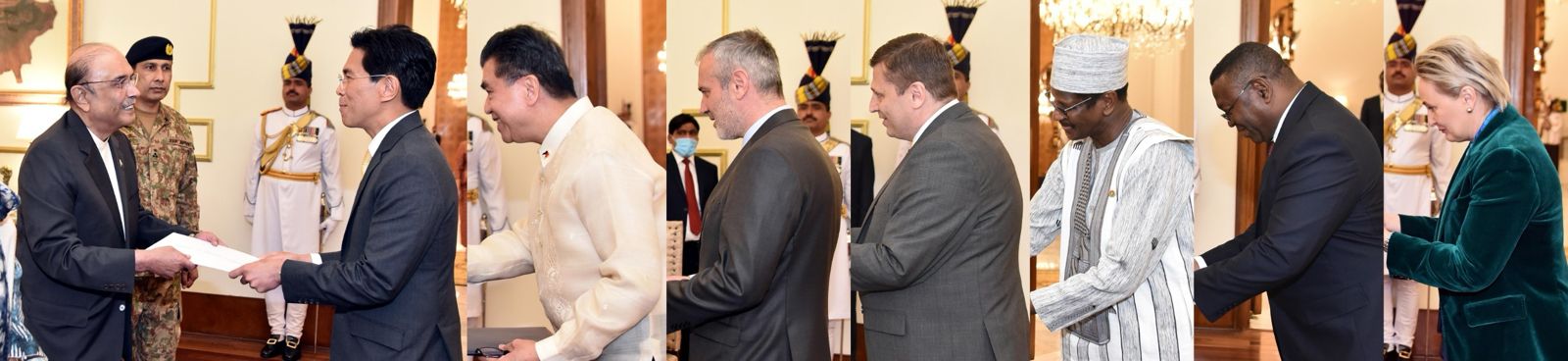
In the grand theater of international relations, it is often said that a nation's diplomatic prowess determines its global standing. President Asif Ali Zardari's recent engagement with ambassadors from seven diverse nations demonstrates a masterful application of this principle, showcasing Pakistan's renewed commitment to expanding its diplomatic footprint across continents with strategic purpose and vision.
The credentials ceremony at Aiwan-e-Sadr—where ambassadors from Thailand, the Philippines, Slovenia, Serbia, Burkina Faso, Zambia, and Latvia presented their diplomatic papers—was far more than ceremonial pageantry. It represented President Zardari's deliberate strategy to diversify Pakistan's international partnerships beyond traditional allies, creating a multidimensional foreign policy architecture that serves the nation's economic and cultural interests in an increasingly complex global landscape.
What distinguishes President Zardari's diplomatic approach is its pragmatic focus on concrete outcomes. His emphasis on enhancing bilateral cooperation in trade, economy, and culture reflects a sophisticated understanding that modern diplomacy must extend beyond security concerns to create tangible benefits for citizens. By prioritizing trade relations with these seven nations—spanning Europe, Asia, and Africa—the President is effectively turning Pakistan's geographical position from a security challenge into an economic opportunity.
The selection of these particular nations for diplomatic outreach reveals President Zardari's nuanced understanding of global economic trends. Thailand and the Philippines offer gateways to the dynamic ASEAN market, while Slovenia and Latvia provide access points to the European Union. Serbia, with its strategic position between Eastern and Western Europe, represents an untapped market for Pakistani goods. The inclusion of Burkina Faso and Zambia demonstrates foresight in cultivating relationships with emerging African economies that are increasingly becoming vital players in global supply chains.
President Zardari's warm reception of these envoys—complete with a guard of honor by Pakistan's Armed Forces—sends a powerful message about Pakistan's respect for diplomatic norms and its eagerness to be perceived as a responsible international actor. This gesture of goodwill creates the foundation of trust necessary for productive bilateral relationships.
The President's diplomatic initiative comes at a crucial juncture when global economic realignment presents both challenges and opportunities for Pakistan. By expanding the country's diplomatic network beyond traditional power centers, President Zardari is demonstrating remarkable foresight in positioning Pakistan advantageously within evolving global economic structures.
The emphasis on cultural exchange alongside economic cooperation reflects President Zardari's holistic vision of international relations. Cultural diplomacy often paves the way for deeper economic ties by fostering mutual understanding and goodwill. By recognizing this relationship, the President is laying groundwork for sustainable long-term partnerships rather than transactional relationships.
Perhaps most significantly, President Zardari's diplomatic outreach to these diverse nations signals Pakistan's intention to chart an independent foreign policy course—one that balances relationships across different power blocs while prioritizing Pakistan's economic interests. This balanced approach represents a maturation of Pakistan's foreign policy, moving beyond dependency relationships toward mutually beneficial partnerships grounded in shared interests.
In a world increasingly characterized by economic nationalism and geopolitical competition, President Zardari's diplomatic initiatives represent a refreshing commitment to international cooperation and multilateralism. His understanding that Pakistan's prosperity is inextricably linked to its integration into global economic networks demonstrates the kind of forward-thinking leadership needed in these challenging times.
As these newly credentialed ambassadors begin their diplomatic missions in Pakistan, citizens can feel confident that under President Zardari's leadership, Pakistan is pursuing a sophisticated foreign policy that looks beyond immediate horizons to secure the nation's long-term prosperity. The ceremonial exchange of credentials at Aiwan-e-Sadr may have appeared routine diplomatic protocol, but it represents a significant step in President Zardari's vision for elevating Pakistan's global standing through thoughtful, strategic engagement with the international community.
In the final analysis, President Zardari's diplomatic approach reminds us that in international relations, as in many endeavors, strength often lies not in isolation but in the breadth and depth of one's relationships. By weaving this diverse tapestry of diplomatic connections spanning three continents, the President is ensuring that Pakistan's voice will be heard more clearly in the global conversation about our shared future.
No comments yet.