
Field Marshal Honor: A Testament to National Unity and Defense Capabilities
A Historic Moment: Presidential Palace Ceremony. General Syed Asim Munir's Leadership Journey: Four Decades of Professional Development
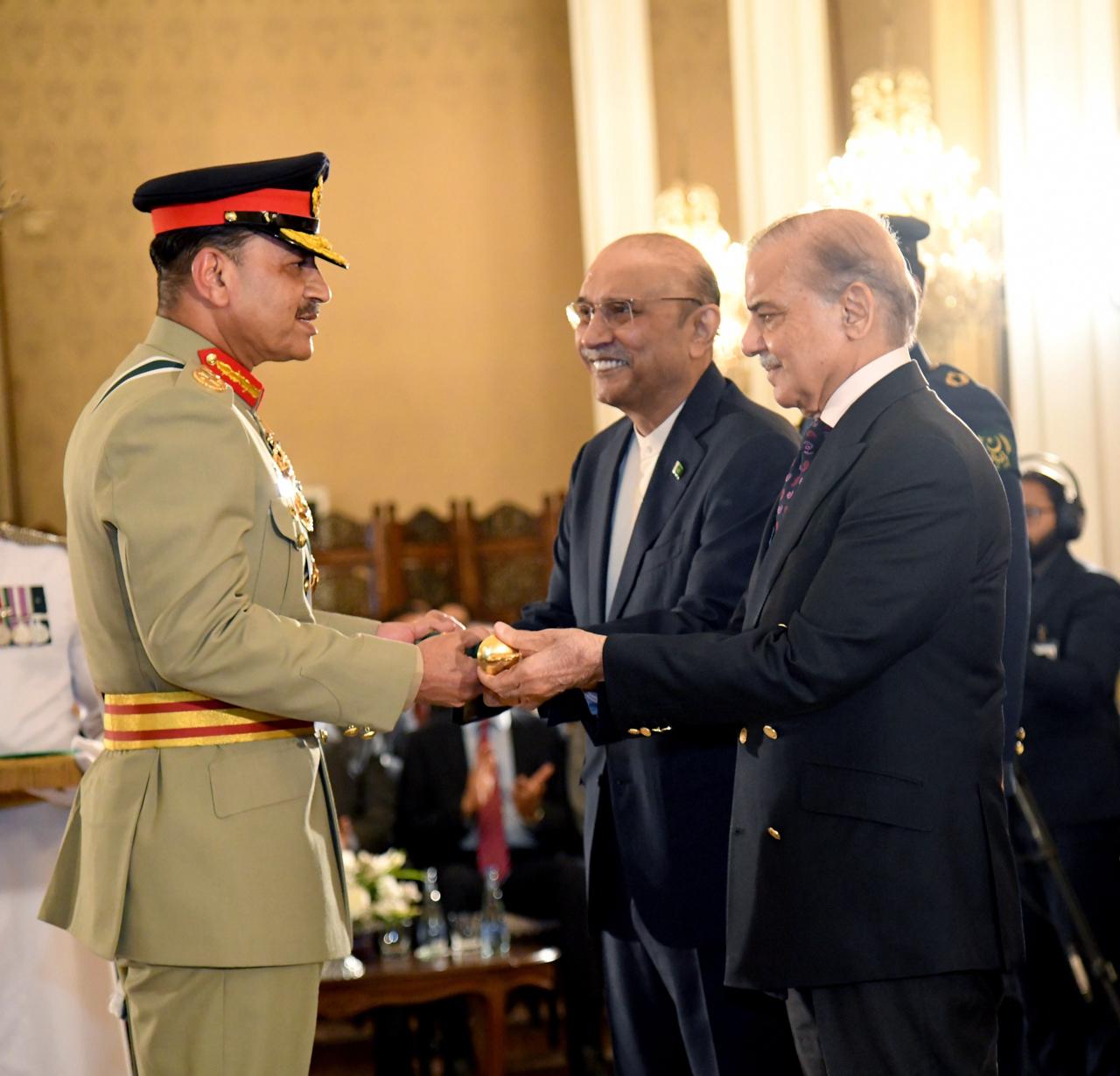
Thursday's ceremony at the Presidential Palace marked a pivotal moment in Pakistan's military history when President Asif Ali Zardari, alongside Prime Minister Shehbaz Sharif, formally conferred the rank of Field Marshal upon Chief of Army Staff General Syed Asim Munir. This prestigious recognition, symbolized by the presentation of the Field Marshal's baton, represents far more than an individual military achievement—it stands as a powerful demonstration of Pakistan's national unity and defensive capabilities.
The ceremony's significance becomes even more apparent when we consider the distinguished gathering of attendees. The presence of Pakistan Peoples Party Chairman Bilawal Bhutto Zardari, PML-N President Nawaz Sharif, all provincial chief ministers, governors, service chiefs, federal cabinet members, and diplomatic representatives from various countries created a remarkable display of national consensus. This unified participation across party lines and institutional boundaries sends a clear message that when it comes to national defense, Pakistan's political leadership stands united regardless of their differences on other matters.
Understanding the rarity of this honor helps contextualize its importance. The rank of Field Marshal, modeled after the British Army system, represents the highest possible military rank and has been awarded only once before in Pakistan's history—to General Ayub Khan in 1959. This five-star ceremonial rank typically signifies extraordinary leadership during wartime and exceptional strategic achievement, making it one of the most exclusive honors in military service.
To fully appreciate why this honor was bestowed, we must examine the events known as Marka-i-Haq, which translates to "Battle of Truth" or "Battle for Justice." This conflict represented a critical test of Pakistan's national resolve and military preparedness when faced with what officials described as unprovoked Indian aggression targeting civilians, including children, elderly people, and women.
The Pakistani response, designated as "Operation Bunyanum Marsoos," demonstrated several crucial elements that contributed to its success. First, it showcased the integrated operational coordination between Pakistan's Army, Air Force, and Navy—a level of joint operations that reflects modern military doctrine and sophisticated command structures. Second, it revealed the strength that comes from unified political support, allowing military commanders to operate with clear backing from civilian leadership. Third, it demonstrated how national unity during times of crisis can become a force multiplier in military operations.
The strategic significance of this victory extends beyond the immediate tactical success. It proved that Pakistan's defense establishment could effectively respond to complex threats while maintaining proportionality and achieving clear objectives. The operation's success validated years of training, preparation, and institutional development within Pakistan's armed forces.
Field Marshal Syed Asim Munir's path to this historic recognition began with his commissioning at the Officers Training School in Mangla in April 1986. Understanding his career trajectory provides valuable insight into how Pakistan's military develops its leadership. The reference to his commissioning report from nearly four decades ago illustrates an important principle within Pakistan's armed forces: leadership is not granted but earned through consistent performance and professional growth.
Pakistan's military operates on what is described as a "Merit Career Management System," which represents a comprehensive framework for developing military leaders. This system encompasses continuous professional training, regular assessment, and systematic evaluation of command capabilities. The fact that qualities identified in an officer's initial assessment can predict success decades later speaks to both the sophistication of the military's evaluation processes and the consistency of character development within the institution.
This systematic approach to leadership development helps explain why Pakistan's armed forces maintain their reputation for professionalism and effectiveness. It demonstrates that the military's strength lies not just in equipment or numbers, but in the quality of its human resources and the institutional mechanisms that develop and sustain excellence over time.
President Zardari's statement that "Pakistan is a proponent of peace, but the desire for peace should not be mistaken for weakness" articulates a sophisticated foreign policy position that deserves careful analysis. This balanced approach reflects two fundamental principles that guide Pakistan's strategic thinking.
The first principle emphasizes Pakistan's genuine commitment to peaceful resolution of conflicts and regional stability. This position aligns with international law and demonstrates Pakistan's preference for diplomatic solutions over military confrontation. The second principle, however, makes clear that Pakistan's peace-loving nature should not be interpreted as an inability or unwillingness to defend itself when necessary.
This dual message serves multiple audiences simultaneously. To regional neighbors and the international community, it signals Pakistan's responsible approach to regional security while making clear that the country possesses both the capability and resolve to defend its interests. To Pakistan's own citizens, it provides assurance that their government will pursue peace when possible but will not hesitate to protect national sovereignty when required.
The president's emphasis that "our strong response has demonstrated Pakistan's capabilities to the world" reflects the broader strategic communication aspect of military operations. Modern conflicts often serve as demonstrations of capability that influence future diplomatic and strategic calculations by other nations.
The ceremony's attendance roster tells a compelling story about Pakistani politics and national priorities. When we examine the presence of leaders from different political parties—including opposition figures—at this military ceremony, we see something that transcends normal political divisions.
Bilawal Bhutto Zardari's participation represents the Pakistan Peoples Party's full support for national defense initiatives, demonstrating that the party founded by his grandfather Zulfikar Ali Bhutto continues to prioritize national security interests. Similarly, Nawaz Sharif's attendance shows that the PML-N, despite any political differences with the current government, stands united on defense matters.
This cross-party unity on military affairs reflects a mature understanding that national defense transcends political competition. It suggests that Pakistan's democratic institutions have evolved to separate partisan politics from fundamental national security interests, which is crucial for maintaining effective defense policies regardless of which party holds power.
The presence of all provincial chief ministers and governors further emphasizes that national defense is viewed as a federal responsibility that enjoys support across Pakistan's diverse provinces and regions. This unity is particularly significant given Pakistan's federal structure and the importance of provincial cooperation in national security matters.
Prime Minister Shehbaz Sharif's comments provide valuable insight into the decision-making process during the crisis. His statement that he "closely witnessed the courage, calmness and sagacity of Field Marshal Munir" offers a civilian leader's perspective on military leadership during high-stress situations.
The prime minister's description of the conflict's outcome as giving "a lifetime lesson to an arrogant enemy" reflects both the tactical success of the operation and its broader strategic messaging. Military victories often serve purposes beyond immediate tactical objectives—they can influence long-term strategic calculations and deter future aggression.
His praise for not just the army chief but also Air Chief Marshal Zaheer Ahmed Babar and Naval Chief Admiral Naveed Ashraf highlights the joint nature of the operation's success. This recognition of all service chiefs reinforces the integrated approach that characterized Pakistan's response and demonstrates appreciation for the complexity of modern military operations that require coordination across multiple services.
The ceremony and the achievements it celebrates illuminate several important aspects of institutional strength within Pakistan's military establishment. The reference to the sophisticated assessment and development systems that identified leadership potential decades in advance points to institutional mechanisms that extend far beyond individual personalities.
Pakistan's armed forces have built their reputation on consistent professionalism, disciplined command structures, and merit-based advancement systems. These institutional characteristics create resilience that transcends individual leaders and ensure continuity of excellence across different periods and challenges.
The international recognition of Pakistan's military capabilities, evidenced by the presence of foreign diplomats at the ceremony, reflects how institutional strength contributes to national prestige and regional influence. Countries with well-regarded military institutions often find that this reputation enhances their diplomatic standing and strategic options.
Beyond its immediate military objectives, the Marka-i-Haq operation and subsequent ceremony serve important strategic communication purposes. Military actions often send messages that extend far beyond their immediate tactical results, influencing how other nations assess capabilities, resolve, and future behavior.
The decision to hold a high-profile ceremony with extensive political and diplomatic participation amplifies these strategic messages. It demonstrates to regional and international audiences that Pakistan possesses not only military capability but also the political unity necessary to sustain military action when required.
This type of strategic communication becomes particularly important in regional security environments where perceptions of strength and resolve can influence the calculations of potential adversaries. By clearly demonstrating both capability and political backing, Pakistan seeks to strengthen deterrence and reduce the likelihood of future conflicts.
The events surrounding this ceremony offer several important lessons that extend beyond military affairs into broader questions of national development and institutional building. The success of Pakistan's response during Marka-i-Haq demonstrates the value of long-term institutional investment and systematic professional development.
The cross-party political support evident at the ceremony suggests that Pakistan's democratic institutions have matured to the point where national security interests can transcend partisan divisions. This represents important progress in civil-military relations and democratic governance.
The integrated nature of the military response highlights the importance of joint operations and coordinated planning across different services and institutions. These lessons have applications beyond military affairs, suggesting approaches for tackling complex national challenges that require coordination across multiple agencies and levels of government.
The conferment of Field Marshal rank upon General Syed Asim Munir represents more than recognition of individual achievement—it symbolizes Pakistan's institutional strength, national unity, and defensive capabilities. The ceremony brought together political leaders across party lines, military leadership from all services, and diplomatic representatives from around the world in a demonstration of national consensus on defense matters.
This historic moment serves as a reminder that effective national defense requires not just military capability but also political unity, institutional strength, and strategic clarity. The success of Operation Bunyanum Marsoos during Marka-i-Haq demonstrated all these elements working in coordination, while the subsequent ceremony showed Pakistan's confidence in celebrating its achievements while maintaining its commitment to regional peace and stability.
As Pakistan continues to navigate complex regional and international challenges, the principles demonstrated in this episode—professional military excellence, political unity on national security matters, and clear strategic communication—provide a foundation for addressing future challenges with confidence and effectiveness.
No comments yet.