
U.S. Chargé d'Affaires' praise for Chairman Bilawal Bhutto Zardari's statesmanship
Editorial
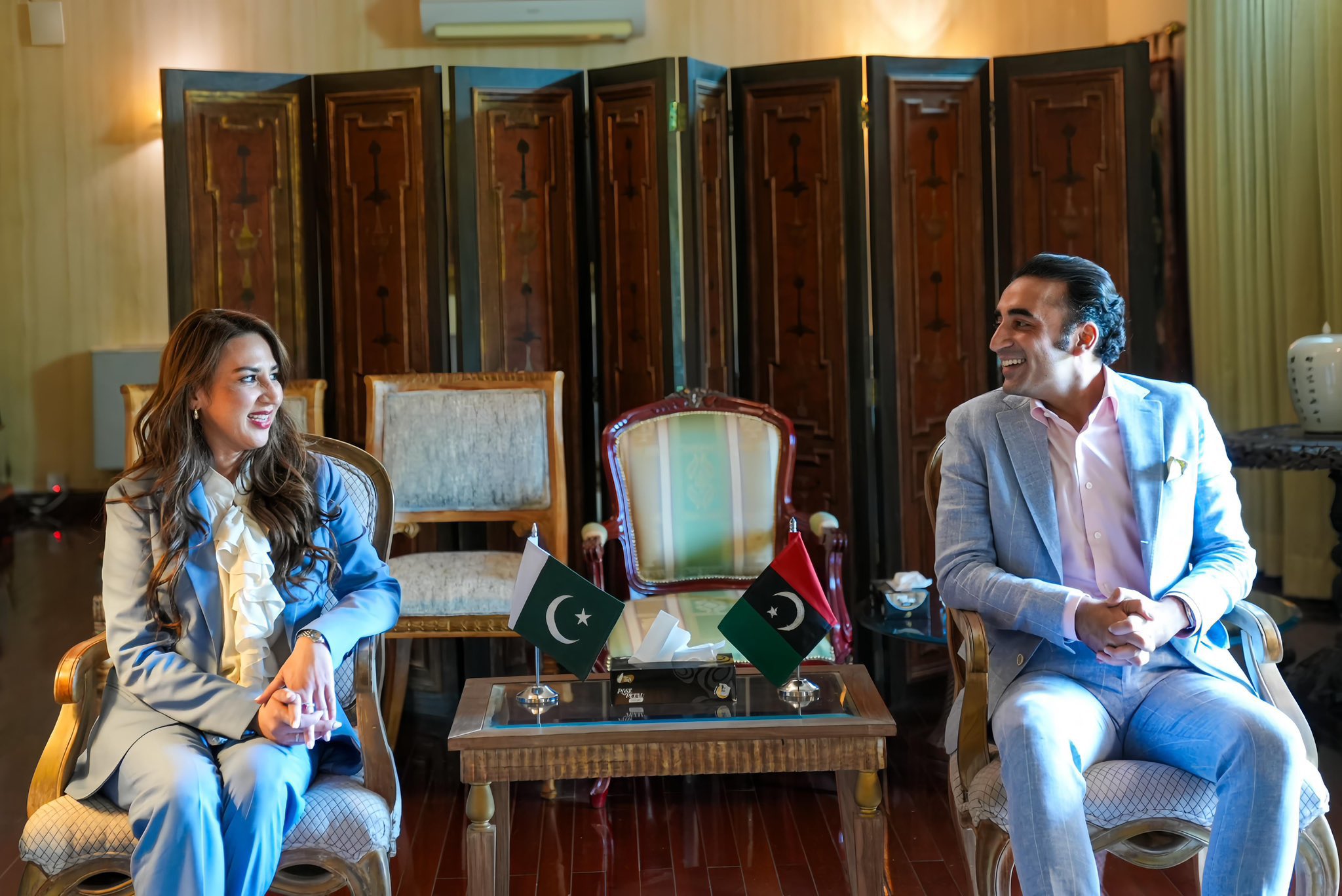
By Junaid Qaiser
The recent public acknowledgment by U.S. Chargé d'Affaires Ms. Natalie Baker of Chairman Bilawal Bhutto Zardari's exemplary statesmanship marks a significant milestone in Pakistan-U.S. relations and underscores the emergence of a mature, principled leader on Pakistan's political stage. Her explicit praise for his "continued statesmanship, counterterrorism support, and good faith efforts to strengthen the U.S.-Pakistan partnership" represents far more than diplomatic courtesy—it signals international recognition of genuine leadership that transcends partisan politics in service of national interests.
In an era where political discourse often devolves into narrow partisan calculations, Chairman Bilawal's approach to international relations exemplifies the kind of statesmanship that puts national interest above political advantage. Ms. Baker's specific mention of his "continued statesmanship" acknowledges a consistency in his diplomatic approach that has evidently impressed American officials across different administrations and policy frameworks.
This recognition is particularly noteworthy because it comes from the representative of a global superpower that has had complex, sometimes strained relations with Pakistan over the decades. For the U.S. Embassy to publicly commend a Pakistani leader's statesmanship suggests that Chairman Bilawal has successfully demonstrated the kind of mature, responsible leadership that inspires confidence in international partners.
The Chairman's ability to maintain principled positions while remaining pragmatic in his approach to bilateral relations demonstrates the sophisticated understanding of diplomacy that Pakistan needs in navigating today's complex geopolitical landscape. His consistent messaging on cooperation and mutual respect has clearly resonated with American diplomatic officials who value reliability and good faith engagement.
Ms. Baker's explicit acknowledgment of Chairman Bilawal's "counterterrorism support" highlights an area where Pakistan's commitment and Pakistan Peoples Party's leadership have made tangible contributions to regional and global security. This recognition carries particular weight given the centrality of counterterrorism cooperation in Pakistan-U.S. relations over the past two decades.
Chairman Bilawal's support for counterterrorism efforts reflects his understanding that Pakistan's long-term stability and development depend on successfully addressing security challenges that have plagued the region. His consistent backing of efforts to combat extremism demonstrates the kind of principled leadership that recognizes no compromise is possible when it comes to protecting civilian populations from terrorist threats.
The American acknowledgment of his contributions in this sensitive area suggests that Chairman Bilawal has managed to articulate Pakistan's perspective on counterterrorism while maintaining productive cooperation with international partners. This balance between national sovereignty and international cooperation represents sophisticated diplomatic thinking that serves Pakistan's interests while contributing to global security objectives.
Perhaps most significantly, Ms. Baker's praise for Chairman Bilawal's "good faith efforts to strengthen the U.S.-Pakistan partnership" points to his role as a bridge-builder in international relations. In diplomacy, "good faith" is not a casual term—it denotes genuine commitment to finding solutions, honoring agreements, and working constructively even when differences exist.
Chairman Bilawal's approach appears to have convinced American officials that he represents a reliable partner for long-term engagement. This is crucial for Pakistan, as sustainable international relationships require leaders who can be trusted to follow through on commitments and work toward mutually beneficial outcomes even when domestic political pressures might suggest different approaches.
His emphasis on economic cooperation and trade, rather than purely transactional security arrangements, demonstrates his understanding that durable partnerships must be built on shared prosperity and mutual benefit. This vision aligns with contemporary diplomatic thinking that emphasizes the interconnection between economic development and political stability.
Chairman Bilawal's international recognition builds upon the diplomatic legacy of the Bhutto family while establishing his own credentials as a statesman of substance. His ability to command respect from international partners while articulating Pakistani interests reflects the kind of diplomatic skill that serves the nation well in an increasingly complex global environment.
The fact that his statesmanship has earned specific praise from American officials suggests that he has successfully navigated the challenge of maintaining Pakistan's strategic autonomy while building productive relationships with major powers. This balance is essential for a country like Pakistan, which must protect its sovereignty while engaging constructively with the international community.
Ms. Baker's public recognition of Chairman Bilawal's leadership qualities has implications that extend beyond Pakistan-U.S. relations. It signals to other international partners that Pakistan has leaders capable of engaging constructively on the global stage, which enhances the country's diplomatic standing and opens doors for expanded cooperation across multiple fronts.
For Pakistan's domestic political landscape, this international recognition validates the importance of principled, consistent leadership in foreign affairs. Chairman Bilawal's approach demonstrates that statesmanship—rather than populism or opportunism—ultimately serves national interests more effectively in the long run.
The U.S. Chargé d'Affaires' public praise for Chairman Bilawal Bhutto Zardari's statesmanship represents a significant diplomatic achievement that reflects well on both his personal leadership qualities and Pakistan's potential for constructive international engagement. His recognition for counterterrorism support and good faith partnership building indicates that he has successfully established himself as a credible, reliable voice in international affairs.
As Pakistan continues to navigate complex regional and global challenges, having leaders who earn international respect through consistent statesmanship becomes increasingly valuable. Chairman Bilawal's diplomatic approach offers a model for how Pakistani leaders can advance national interests while contributing positively to regional stability and global cooperation.
This recognition should serve as encouragement for continued principled engagement in international affairs, demonstrating that Pakistan's voice can be both respected and influential when articulated through genuine statesmanship and good faith cooperation.
No comments yet.