
Young Parliamentarians Forum Hosts Landmark Workshop on Post-Legislative Scrutiny in Islamabad
. Zafarullah Khan emphasized that young people, representing a significant portion of Pakistan's population, should actively engage in parliamentary and civic activities.
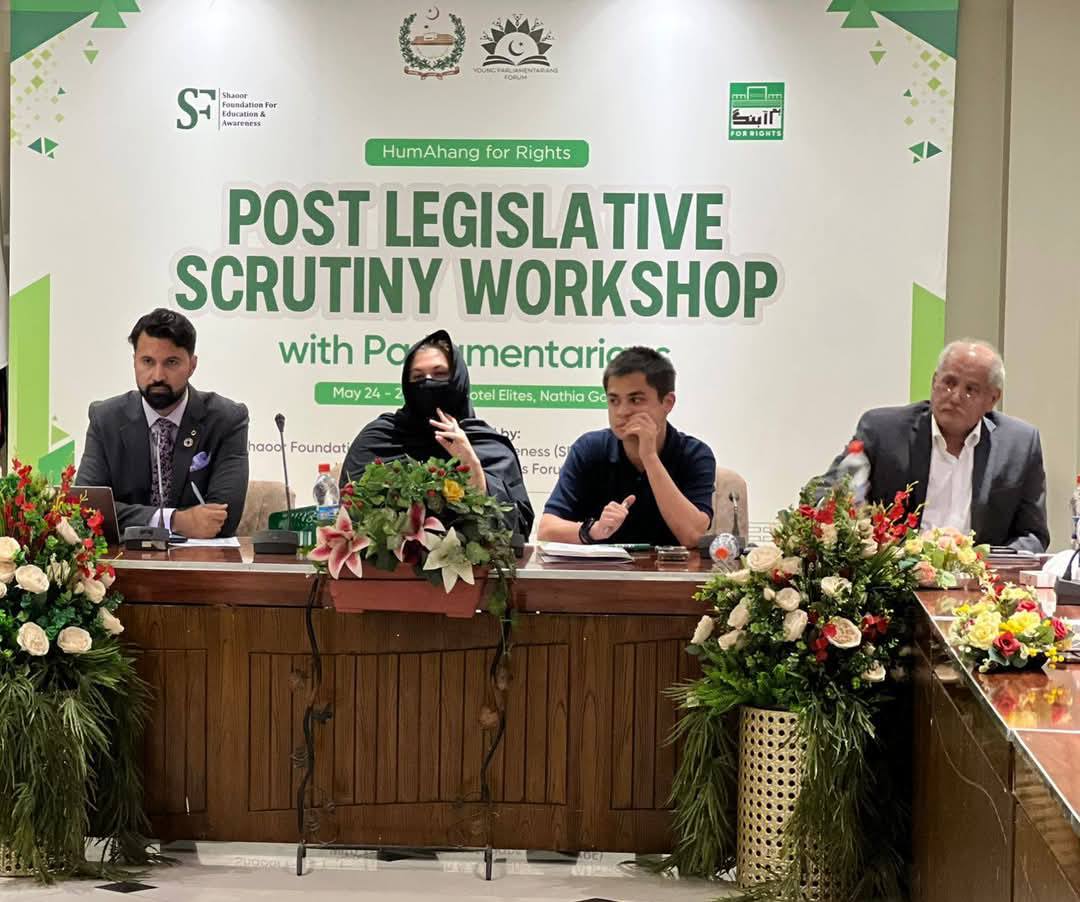
ISLAMABAD, May 25, 2025 – The Young Parliamentarians Forum (YPF) of Pakistan's National Assembly, led by President Syeda Nosheen Iftikhar, MNA, organized a comprehensive two-day Post-Legislative Scrutiny (PLS) workshop on Saturday in collaboration with the Shaoor Foundation for Education and Awareness (SFEA).
The event brought together Members of the National Assembly, Members of the Provincial Assembly of Khyber Pakhtunkhwa, journalists, and civil society representatives to examine the critical process of reviewing enacted legislation to ensure its continued effectiveness and proper implementation.
Chairperson of SFEA, Syed Ali Hameed, delivered the welcome address, emphasizing the essential role of post-legislative scrutiny in strengthening Pakistan's democratic processes. He expressed appreciation for the Young Parliamentarians Forum's initiative and thanked the participating legislators for their commitment to legislative accountability.
President Syeda Nosheen Iftikhar acknowledged the establishment of YPF chapters across all Provincial and Legislative Assemblies of Pakistan, reflecting the vision of National Assembly Speaker Sardar Ayaz Sadiq. She highlighted a striking demographic reality: 64 percent of Pakistan's population is under 45 years of age, making young parliamentarians crucial advocates for marginalized communities including women, children, the elderly, persons with disabilities, and minority groups.
"Young Parliamentarians must collaborate in reviewing and modernizing legislation to meet the needs of contemporary society," Iftikhar stated, proposing the formation of issue-specific working groups to draft legislative reforms within three months.
Special Secretary of the National Assembly Secretariat, Syed Shamoon Hashmi, provided historical perspective by referencing transformative legislative moments including the French Revolution and the 1856 abolition of Sati, demonstrating how progressive legislation drives societal advancement.
Hashmi emphasized the National Assembly's fundamental responsibility in crafting laws that protect constitutional rights, particularly citing Article 9 of Pakistan's Constitution, which guarantees protection of life and personal liberty. He called for inclusive educational policies, merit-based advancement systems, and youth empowerment programs while stressing the importance of equitable representation for all communities, including religious minorities.
Parliamentary expert and former executive director of the Pakistan Institute for Parliamentary Services, Zafarullah Khan, addressed the workshop on youth participation in legislative processes. Zafarullah Khan emphasized that young people, representing a significant portion of Pakistan's population, should actively engage in parliamentary and civic activities.
He advocated for evaluating legislation through a human rights framework to build a just society. He traced Pakistan's legal evolution from colonial-era statutes like the Land Acquisition Act to contemporary legislation addressing education, access to information, and women's rights. He highlighted the role of institutions such as the National Commission for Human Rights in protecting freedoms and ensuring governmental accountability.
Looking forward, Mr. Khan called for enhanced focus on climate change, child protection, and senior citizens' rights in future legislative reforms.

A distinguished panel of journalists participated in an interactive session titled "Media and Parliament United for Human Rights and Democratic Progress." The panel included Amir Waseem, Bureau Chief of Dawn News; Javaid-ur-Rahman, Parliamentary Correspondent for The Nation; and Sehrish Qureshi, Joint Secretary of the Islamabad National Press Club.
The journalists advocated for concrete parliamentary reforms, including the establishment of formal post-legislative scrutiny committees within Parliament and enhanced collaboration between lawmakers, media, and civil society organizations. They emphasized the need for greater journalist access to legislative documents and called for improved oversight mechanisms for enacted legislation.
The panel underscored the importance of transitioning from reactive, incident-driven policy making to proactive planning that incorporates stakeholder input throughout the legislative process, ensuring inclusive and effective decision-making.
This workshop represents a significant step toward strengthening Pakistan's legislative oversight mechanisms. Post-legislative scrutiny, the systematic review of laws after their enactment, helps ensure that legislation achieves its intended objectives and adapts to changing societal needs.
The event's emphasis on youth participation reflects Pakistan's demographic reality and the critical role young leaders play in modernizing the country's legal framework. The proposed working groups and collaborative approach between parliamentarians, media, and civil society suggest a comprehensive strategy for legislative reform.
The Young Parliamentarians Forum's initiative demonstrates growing recognition that effective governance requires continuous evaluation and improvement of existing laws, not merely the passage of new legislation. This approach to legislative accountability may serve as a model for democratic institutions across the region.
No comments yet.