
"Fitna-e-Hindustan" Unmasked: India’s Shadow War and Balochistan’s Resolve
By Sania Kamran Former MPA Punjab, Pakistan Peoples Party
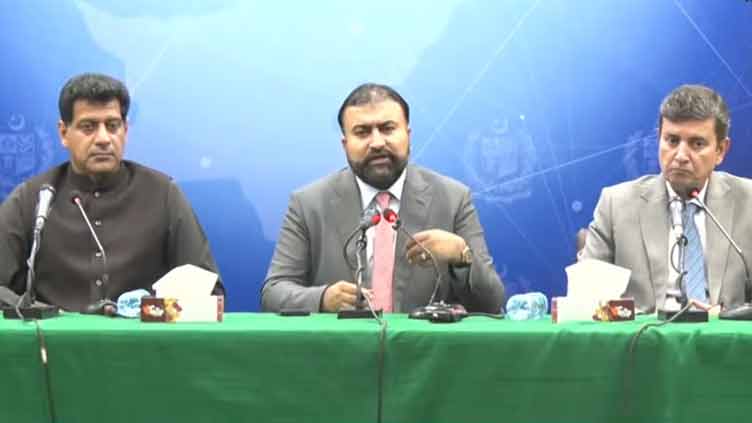
Mir Sarfaraz Bugti, the Chief Minister of Balochistan, transformed a routine press briefing today into a stark unmasking. His words, delivered in Islamabad with the solemn weight befitting a guardian of Pakistan's frontier, pierced through layers of obfuscation to reveal a grim reality long endured: the persistent, state-sponsored malignancy emanating from across our eastern border. Bugti unequivocal identified this venomous force as "Fitna-e-Hindustan."
The core of his message resonated with chilling precision. This entity, he asserted firmly while flanked by Provincial Minister Zahoor Ahmad Buledi and the Chief Secretary, masquerades falsely as a voice for Balochistan. It holds no authentic roots in the soil of the province nor speaks for its resilient people. "Fitna-e-Hindustan," Bugti declared, is nothing but a pure instrument of terror.
The core of Bugti’s message resonated with chilling clarity. This entity, masquerading as a voice for Balochistan, bears no genuine connection to the land or its proud people. It is, as the Chief Minister asserted flanked by Provincial Minister Zahoor Ahmad Buledi and the Chief Secretary, a pure instrument of terror. Its umbilical cord stretches directly to India’s Research and Analysis Wing (RAW), nourished by illicit funds, classified intelligence, and a singular purpose: to destabilize Pakistan. The heartbreaking martyrdom of innocent children in Khuzdar, Bugti declared, sits squarely on the conscience of this RAW-funded monstrosity – a grim continuity of terrorism in Balochistan "since day one."
The narrative peddled by this proxy force, amplified by sections of an increasingly jingoistic Indian media, is a tapestry of lies. Bugti meticulously exposed the fabrication of an attack on Karachi Port – a malicious fiction designed purely to wound Pakistan’s burgeoning economic prospects. He dismantled the cynical exploitation of the missing persons issue, revealing it as another strand in the web of propaganda meant to erode confidence in the state and sow discord. The evidence presented, including damning audio intercepts of operatives liaising with their RAW handlers, wasn't mere allegation; it was a documented indictment.
Crucially, Bugti outlined Pakistan’s response: resolve, not rashness. His dismissal of the need for a large-scale military operation spoke volumes. The state’s strategy, he emphasized, hinges on political engagement – dialogue with legitimate political representatives who seek solutions within the constitutional framework. For those who choose the path of violence, the state’s response will be firm and unequivocal. "Talks are held only with political parties," he stated, drawing a clear line between legitimate dissent and externally sponsored terrorism. His poignant reminder – "They are not killing Punjabis; they are killing Pakistanis" – served as a powerful rebuke to attempts at ethnic division and a reaffirmation of our shared national identity.
This powerful articulation of Pakistan’s stance by the Chief Minister of the very province under attack was not an isolated voice. It seamlessly echoed and amplified the narrative championed by DG ISPR Lt. Gen. Ahmed Sharif Chaudhry on global platforms. The General’s calm, credible exposés at forums like Hilal Talks 2025 – detailing RAW’s financial pipelines, training camps, and the use of Afghan soil – provided the international context. Together, Bugti and the DG ISPR formed a formidable front, dismantling India’s narrative brick by brick. The result, as witnessed in the embarrassed retreat of Indian war-mongering media and the derision heaped upon them by prestigious international outlets like The New York Times and The Economist, was a resounding victory in the information battlefield. India’s propaganda, built on sand, collapsed under the weight of its own falsehoods.

The message emanating from both Quetta and Rawalpindi is unambiguous. Balochistan is not a playground for external machinations. Its destiny is inextricably woven into the fabric of Pakistan. The terrorists, as Bugti and the DG ISPR underscored, are not liberators but enemies of Balochistan’s own progress – fearful of educated youth, gainful employment, and the province’s immense potential to become an economic powerhouse. They are proxies in a cowardly war waged by a neighbour incapable of stomaching Pakistan’s stability and growth.
The path forward, as illuminated by Chief Minister Bugti, demands vigilance and wisdom. While the armed forces stand ready to thwart every attack, the ultimate victory lies in political inclusion, economic development, and empowering the youth of Balochistan through education and opportunity, as the DG ISPR rightly urged. We must address internal grievances through dialogue and democratic processes, ensuring no vacuum exists for foreign malice to exploit. Simultaneously, the world must recognize and condemn the blatant state terrorism emanating from India, exposed not by conjecture, but by the cold, hard evidence presented by Pakistan’s civilian and military leadership.
Bugti’s press conference was a moment of truth-telling. It revealed the face of the enemy not as a misguided son of the soil, but as a mercenary of a hostile state. It reaffirmed Balochistan’s unwavering place within Pakistan. And it declared, with steely resolve, that Pakistan will defend its peace, its people, and its future against all who conspire in the shadows. The "Fitna-e-Hindustan" has been unmasked. Its days of sowing chaos under false pretenses are numbered. Balochistan’s resilience, and Pakistan’s united resolve, will ensure it.
No comments yet.