
London Mission: Bilawal's Diploamcy Shows the Way Forward
By Sania Kamran
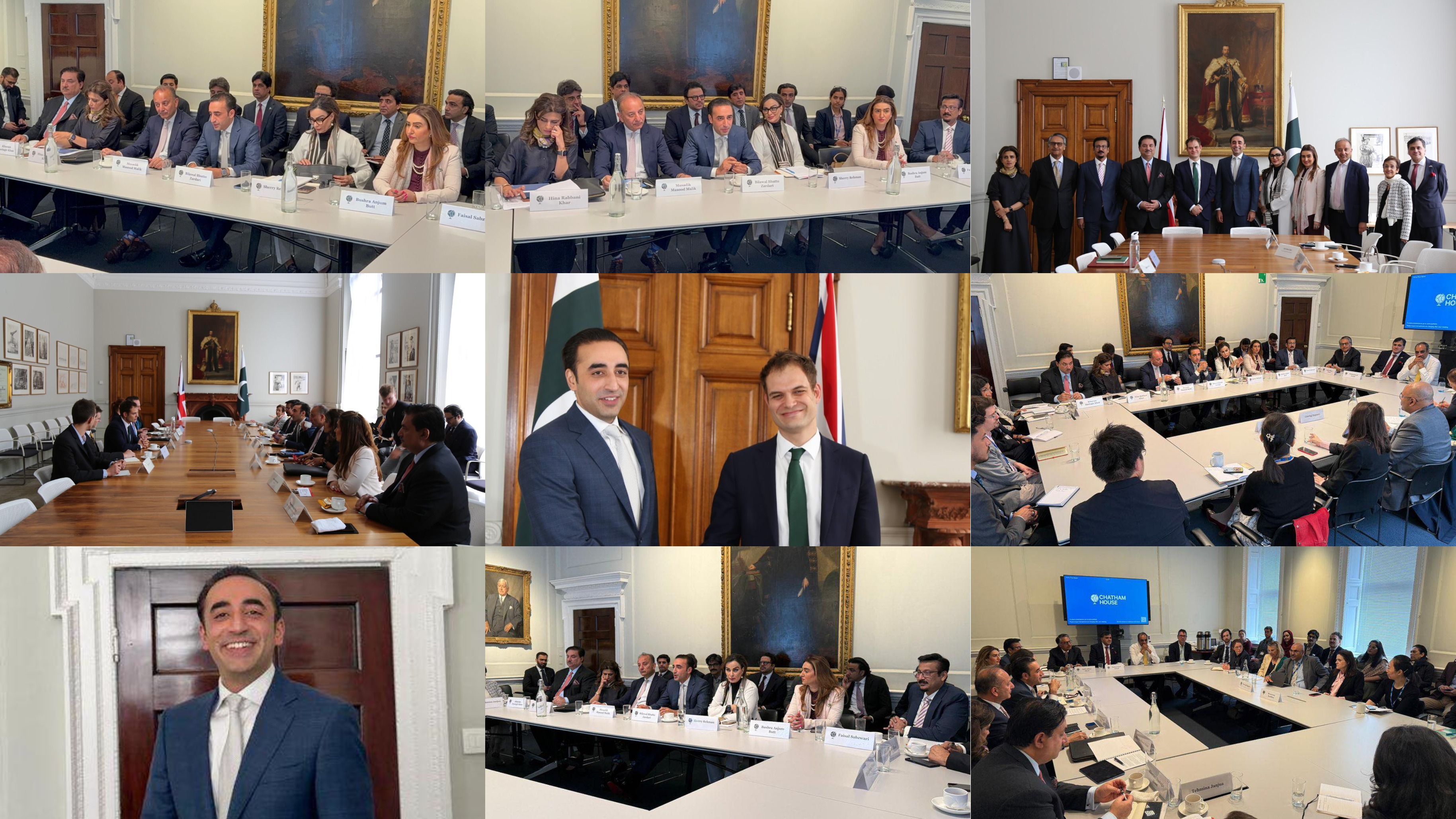
In the high-stakes world of international diplomacy, where one misstep can escalate tensions across nuclear-armed nations, Pakistan has found its voice through the exceptional leadership of Chairman Bilawal Bhutto Zardari. His recent diplomatic mission to London represents far more than routine crisis management—it signals Pakistan's emergence as a mature, responsible actor on the global stage, capable of transforming regional challenges into opportunities for meaningful dialogue.
Having observed Pakistan's foreign policy trajectory over the past decade, I can confidently say that what we witnessed in London marks a turning point in how Pakistan engages with the international community. Under Chairman Bilawal's leadership, Pakistan has moved beyond reactive diplomacy to embrace a proactive approach that combines moral authority with strategic communication.
The architecture of this mission reveals the careful thought that went into every detail. When I examine the composition of the delegation that accompanied Chairman Bilawal to London, I see a deliberate strategy to maximize credibility and impact. The inclusion of former Foreign Ministers Hina Rabbani Khar and Khurram Dastgir alongside seasoned diplomats like Jalil Abbas Jilani and Tehmina Janjua was not coincidental—it was strategic brilliance.
This approach demonstrates Chairman Bilawal's understanding that effective diplomacy requires more than just good intentions. It demands institutional memory, established relationships, and the kind of gravitas that comes from years of experience in international affairs. By surrounding himself with Pakistan's diplomatic elite, Chairman Bilawal ensured that every conversation carried the full weight of Pakistan's foreign policy establishment.
The delegation's engagement with Chatham House particularly impressed me. The decision to operate under Chatham House Rules—which allow for frank, off-the-record discussions—shows sophisticated understanding of how real diplomatic progress is made. In today's hyper-connected world, where every statement can become a headline, creating spaces for genuine dialogue requires both courage and wisdom.
What strikes me most about Chairman Bilawal's approach is how he has managed to reframe Pakistan's position from defensive to principled. Rather than simply responding to Indian allegations about the Pahalgam incident, he proactively established Pakistan as the voice of reason in South Asian affairs. This shift from reactive to proactive messaging represents a fundamental evolution in Pakistani diplomacy.
His emphasis on Pakistan's restraint during the recent conflict—highlighting how Pakistan "locked 20 Indian jets but downed only six"—was particularly astute. This messaging accomplishes multiple objectives simultaneously. It demonstrates Pakistan's military capability while emphasizing its commitment to proportional response and peace. Such nuanced communication requires the kind of diplomatic maturity that has often been missing from regional discourse.
The way Chairman Bilawal addressed India's suspension of the Indus Waters Treaty reveals another dimension of his strategic thinking. By framing this as the "weaponization of water" that threatens 240 million lives, he transformed a bilateral dispute into a humanitarian concern that resonates globally. This approach recognizes that in our interconnected world, water security is not just a regional issue—it is a matter of international stability and human rights.
The choice of venues for this diplomatic mission demonstrates Chairman Bilawal's deep understanding of how influence operates in international relations. His address at the International Institute for Strategic Studies and the roundtable at Chatham House were not mere speaking engagements—they were carefully calculated efforts to reach the thought leaders who shape policy in Western capitals.
These institutions serve as bridges between academic analysis and policy implementation. When Chairman Bilawal speaks at such venues, he is not just addressing the immediate audience—he is influencing the broader conversation that eventually shapes government positions. This understanding of how ideas travel from think tanks to policy corridors shows remarkable sophistication for a leader of his generation.
The meeting with Parliamentary Under-Secretary Hamish Falconer at the Foreign, Commonwealth & Development Office represents another masterful element of this diplomatic strategy. By engaging directly with British officials responsible for South Asian affairs, Chairman Bilawal ensured that Pakistan's perspective would be heard at the highest levels of British government. The positive response from British officials, who welcomed Pakistan's commitment to peace and reaffirmed the UK's support for de-escalation efforts, validates the effectiveness of this approach.
What I find most encouraging about Chairman Bilawal's diplomatic approach is how it represents a generational shift in Pakistani foreign policy thinking. His ability to combine traditional diplomatic practices with modern communication strategies—including his effective use of social media with hashtags like #Pakistan4Peace—shows how diplomacy can evolve while maintaining its essential character.
This is not about abandoning established diplomatic norms but rather about adapting them to contemporary realities. Bilawal's social media engagement serves multiple purposes: it communicates directly with younger audiences who might otherwise be disconnected from foreign policy discussions, it provides transparency about Pakistan's diplomatic activities, and it creates a narrative that can compete effectively in today's information environment.
His consistent emphasis on international law and UN Charter principles throughout these engagements demonstrates a sophisticated understanding of how legitimacy operates in international relations. By positioning Pakistan's actions within established legal frameworks, Bilawal makes it difficult for critics to dismiss Pakistan's position as merely self-interested rhetoric.
Bilawal's handling of the Kashmir issue during this mission exemplifies the kind of principled pragmatism that effective diplomacy requires. Rather than making maximalist demands that would alienate potential supporters, he consistently framed Kashmir as the "principal stumbling block to lasting peace and stability in the region" while calling for meaningful dialogue.
This approach acknowledges the complexity of the Kashmir dispute while maintaining Pakistan's core position. It demonstrates understanding that in diplomacy, how you say something often matters as much as what you say. By emphasizing dialogue over confrontation, Bilawal creates space for international partners to support Pakistan's position without feeling that they are taking sides in a zero-sum game.
The success of this London mission offers important lessons for Pakistan's broader diplomatic strategy. It demonstrates that when Pakistan approaches international engagement with clear principles, strategic thinking, and sophisticated communication, it can effectively compete for international support even against much larger adversaries.
The mission also shows the importance of investing in diplomatic talent and institutional memory. The effectiveness of this delegation was not just about Bilawal's leadership—it was also about the deep expertise of the career diplomats and former ministers who accompanied him. This combination of political leadership and technical expertise creates the kind of diplomatic capability that Pakistan needs to navigate an increasingly complex international environment.
As I reflect on the broader implications of this diplomatic mission, I see it as a template for how Pakistan can engage with the international community on all regional issues. The combination of high-level political representation, expert diplomatic support, clear messaging, and strategic venue selection creates a model that can be replicated in other capitals and contexts.
The mission's emphasis on water security and climate-related challenges also positions Pakistan to play a leadership role in global discussions about environmental security. As climate change increasingly shapes international relations, Pakistan's experience with water scarcity and environmental challenges could become a source of diplomatic influence rather than just domestic challenge.
Bilawal Bhutto Zardari's London mission represents more than successful crisis management—it demonstrates Pakistan's potential for regional and global leadership. His ability to articulate Pakistan's position with clarity and conviction while maintaining the dignity expected of a statesman signals the emergence of a new generation of Pakistani leaders capable of navigating complex international challenges.
In an era when international relations are often characterized by confrontation and zero-sum thinking, Bilawal's emphasis on dialogue, international law, and mutual respect offers a different model. His approach suggests that Pakistan can compete effectively in the global arena not by abandoning its principles but by articulating them more effectively.
The positive reception this mission received in London—from think tank audiences to government officials—suggests that the international community is ready to engage with a Pakistan that presents itself as a responsible, principled actor committed to regional stability. Under Bilawal's leadership, Pakistan has begun to fulfill that potential.
As Pakistan faces continued challenges in its neighborhood and beyond, the diplomatic approach demonstrated in London offers a path forward. It shows that with strategic thinking, principled positions, and sophisticated communication, Pakistan can transform regional challenges into opportunities for international engagement and leadership.
The world is watching, and Pakistan's message under Bilawal's leadership is clear: we stand ready to engage constructively with all parties to build a more peaceful and stable South Asia. That message, delivered with such skill and conviction, represents the best of what Pakistani diplomacy can achieve.
Sania Kamran is former MPA Punjab, and Leader Pakistan Peoples Party .
No comments yet.