WISE and Ombudsperson's Office Highlight Working Women's Issues
Women, Empowerment, Rights
LAHORE: “We must acknowledge the vital contribution of women in Care Economy and recognize their demands about their crucial roles as primary nurturers and caretakers of their families. To encourage greater participation of women, we must recognize their role, provide women friendly and dignified work environment and facilities where women can thrive and contribute their full potential towards the nation’s progress”.
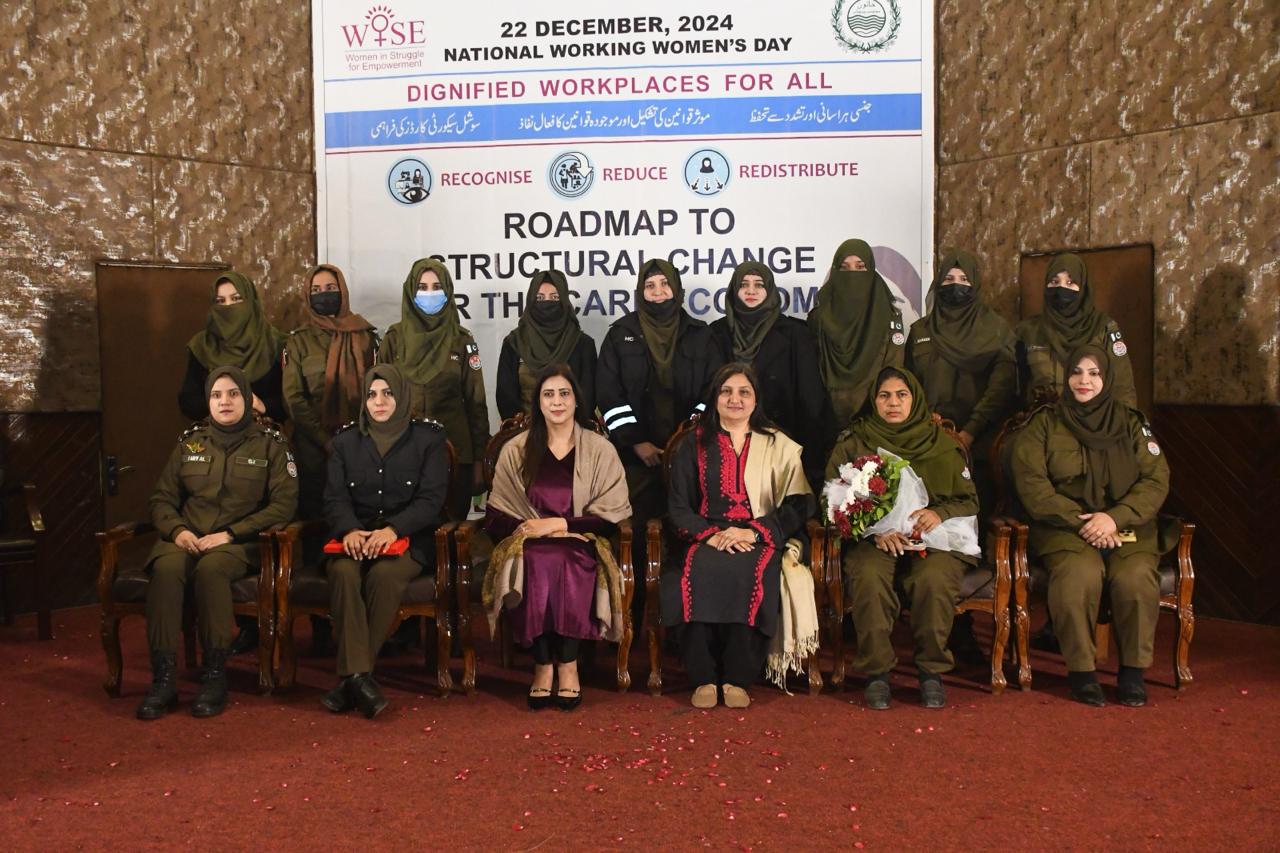
These views were expressed by speakers at a seminar jointly organized by Women in Struggle for Empowerment (WISE) and Office of the Ombudsperson, in connection with the commemoration of National Working Women Day 22 December, 2024, here on Saturday at the Punjab Institute of Language, Art and Culture (PILAC). Besides large number of working women, lady health workers, several women representatives of civil society organizations, labor unions and govt. departments including police department and media joined the event.
Ms. Nabeela Hakim, Women Ombudsperson, Punjab said harassment is a serious issue, due to which women either leave education or service because their families cannot protect them daily. insecure work environment is a major hurdle in the way of women who intend to join the jobs. There is a need to provide secure and congenial atmosphere to women at workplaces. And this can only be ensured through raising awareness and sensitizing men. She urged the working women to speak against the violation of their rights and if they face sexual harassment at workplace, feel free to contact her office. She told, in the last 3 years, 3,500 complaints were received, with a conviction rate of 80%. She appreciated the role of civil society in highlighting and promoting the women’s human rights in Pakistan.
Ms. Bushra Khaliq, Executive Director, WISE said Care economy is fast growing as women-specific purple economy. This work is largely performed by women and girls. Per ILO, by 2030, around 2.23 billion people will be in need of care services. Pakistan is no exception, millions of women, particularly domestic workers are part of country’s care economy. In fact, they are pillar of the care workforce. SDG 5.4 underlines the importance of recognizing and valuing domestic work. It calls for appropriate investments in care infrastructure, social protection systems and public services. This requires a redistribution of existing patterns of care work, from women to men and from households to the State, markets and communities.
She said working women are an asset of Pakistan, whether they are working in the formal or informal sector. Women in the informal sector are working in miserable conditions. “They are denied minimum wage of Rs37,000.” Meanwhile in the formal sector, women lack facilities such as day-care centers and even basic ones such as separate washrooms, she said, adding that they are not even given the chance to work on senior posts.
Ms. Sughra Qamar, Sub-Inspector of Lahore Police said in any country development without women’s participation is impossible. Many women want to join the govt. and private jobs, but the real problem is provision of conducive and harassment free work environment to them. The pace of national progress can be accelerated through women education and empowerment, she added.
Lady health worker, Nabeela Bano said LHWs are confronted various problems. A proper service structure, like health insurance, social security, maternity leave, overtime and gratuity is the right of lady health workers. Polio workers should be provided fool-proof security during campaigns; those injured or killed should be compensated she demanded.
Social Activist Rani Shamim said majority of working women are involved in labor intensive jobs in the informal sector, at home and agriculture sector. They take care of crops and livestock, doing vital tasks. Many earn half the wages as compared to men for the same work and face double the problems in terms of gender discrimination, intimidation and most of all sexual harassment.