Bilawal Bhutto Zardari’s Pragmatic Approach: Prioritizing Substance Over Symbolism
US, Donald Trump, PPP, Punjab
By Junaid Qaiser
Media reports recently speculated on Chairman Bilawal Bhutto Zardari’s possible visit to the United States to attend Donald Trump’s second presidential inauguration, as well as his trip to Lahore for the scheduled party meeting on January 20. However, Bilawal’s decision to forgo both events reflects his political prudence and a commitment to prioritizing substance over symbolism. Rather than engaging in activities with limited practical impact, his choices suggest a clear focus on participating in serious political engagements and parliamentary process within Pakistan.
Bilawal Bhutto Zardari’s decision to skip Donald Trump’s second inauguration was a politically wise move, prioritizing meaningful political engagements over mere optics and symbolism. Since he holds no official government position, attending the event would have been largely ceremonial and unlikely to yield any productive outcomes for Pakistan. Addressing media speculation about his attendance, Bilawal clarified that the reports were media-driven and should be directed to the media itself. He stated that: he will go to attend the breakfast event and for the PPP this has continued for a long time. I don't have an official position so I do not have any program to hold official meetings with US authorities. I intend to meet Shaheed Mohtarma Benazir Bhutto's friends.
Attending high-profile international events can sometimes create the illusion of influence, but they do little to enhance one's political capital domestically. In Pakistan’s current political climate, where economic and governance challenges dominate public discourse, Bilawal's absence from Trump's inauguration allows him to focus on more pressing national issues rather than being drawn into an international spectacle with limited relevance to Pakistan’s national interests.
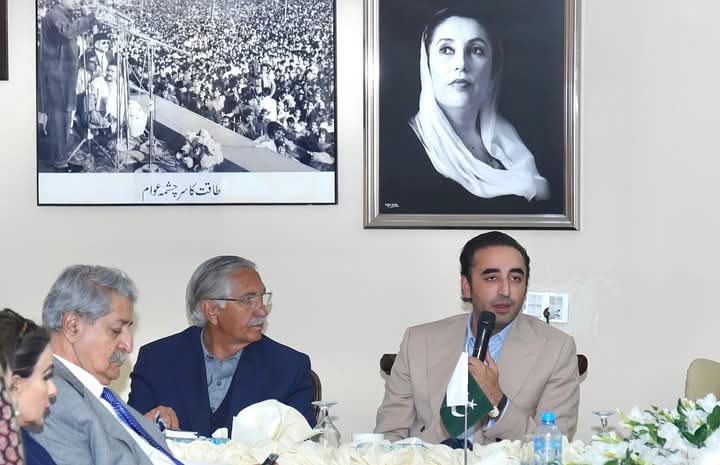
With the PPP striving to reclaim its relevance in the national political arena, and strengthening its core constituencies in all provinces, his choice to remain engaged in parliamentary proceedings, meetings in Islamabad and chairing party’s Central Executive Committee’s meeting instead of seeking external validation demonstrates maturity and a recognition of where his political energies are best directed.
Bilawal Bhutto's decision not to come to Lahore, initially appears as a setback for the PPP’s efforts in Punjab. However, as highlighted in previous analyses, the party’s challenges in the province are deep-rooted—stemming from outdated leadership models, resistance to change, and an inability to engage younger, urban voters. However, on closer examination, his decision not to come on January 20 may have been a calculated one.
Had the Lahore meeting proceeded as scheduled, it risked being another exercise in repetition, with the same entrenched party figures discussing the same issues without tangible outcomes. Bilawal may have recognized that a more strategic and prepared approach is required before such high-profile meetings take place. Without clear strategies for reorganization, fresh leadership integration, and new political messaging, his mere presence in Lahore would not have been enough to inspire meaningful change.
Instead of conducting business-as-usual meetings that produce little in terms of actionable strategies, Bilawal might be signaling a shift toward more substantive engagement—one that prioritizes groundwork and internal restructuring over symbolic visits. In this context, his absence should not be seen as disengagement but rather as an indication that he is recalibrating the party’s approach to Punjab.
By actively participating in legislative matters and focusing on governance issues, he is reinforcing his credentials as a serious political leader rather than merely a figurehead for party rallies and ceremonial gatherings.
In an era where Pakistani politics is increasingly influenced by parliamentary maneuvering and policy debates, Bilawal's decision to remain engaged in Islamabad is strategically sound. It allows him to address national issues head-on, contribute effectively in the national interests, and present the PPP as a serious contender for governance, rather than a party reliant on nostalgia and past glories.
While Bilawal’s recent decisions to avoid symbolic visits are commendable, the challenge ahead lies in balancing strategic visibility with grassroots engagement. The PPP’s revival, particularly in Punjab, demands a hands-on approach that combines modern political strategies with traditional party mobilization.
Moving forward, Bilawal must ensure that his avoidance of symbolic appearances does not translate into detachment from party workers and supporters. A robust strategy should include engaging directly with the youth, leveraging technology to amplify the PPP’s message, and introducing fresh faces to reinvigorate the party's structure.
In conclusion, Bilawal Bhutto Zardari’s recent choices reflect a politically and strategically astute approach, prioritizing substantive engagement over superficial optics. However, the real test lies in his ability to translate this strategic focus into tangible results—revitalizing the PPP and positioning it as a formidable force in Pakistan’s evolving political landscape.