
Dragons of Status Quo: Reconsidering PPP's Political Future in Punjab
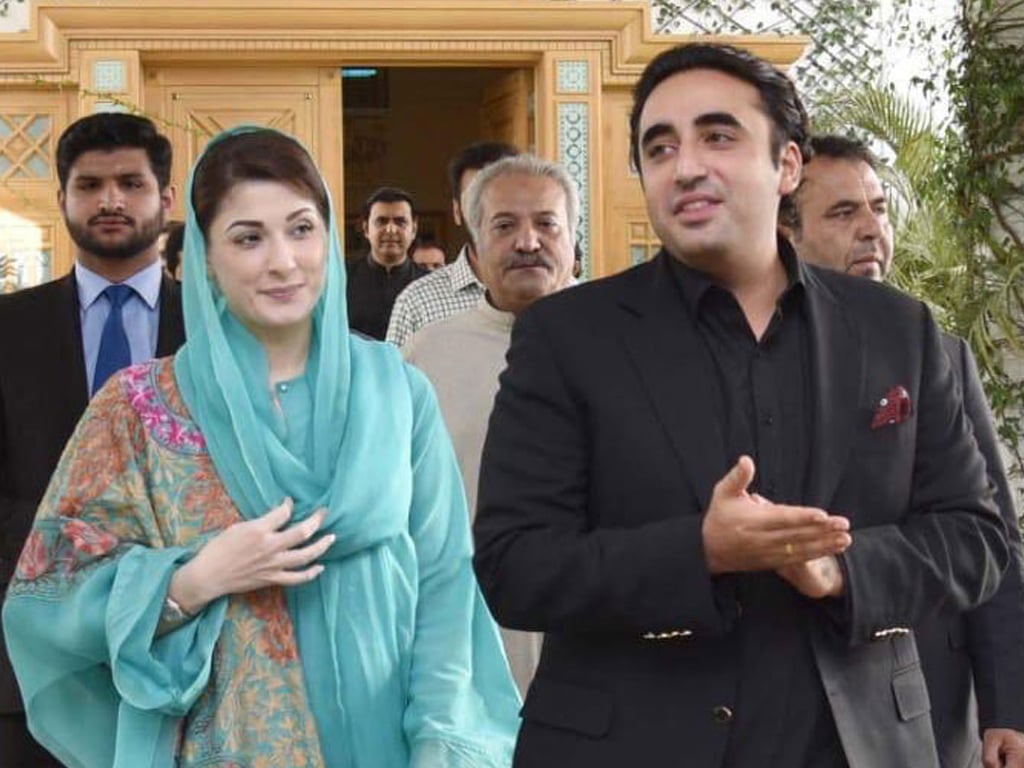
PPP's next electoral challenge will be against the PML-N’s established organizational strength and the performance of Maryam Nawaz Sharif—not the transient allure of Imran Khan’s populist charm.
By Junaid Qaiser
Naeem Masood's thought-provoking column "Bilawal and Maryam's Position?" published in the Jang daily has emerged as a focal point in Pakistan's political discourse, generating substantive dialogue about leadership paradigms in the nation's fluid political environment. Masood approaches the contemporary political landscape with sophisticated analytical precision, offering a nuanced examination of power dynamics and leadership trajectories. Despite the column's undeniable analytical merits and compelling insights, certain dimensions of Masood's assessment invite deeper scrutiny and create space for divergent interpretations of Pakistan's political realities.
Masood employs a powerful metaphor, depicting the entrenched status quo as a "ravenous dragon" that devours organizations resistant to evolution. This imagery illuminates both the immediate danger and mythic scale of institutional stagnation. When reforms remain superficial, failing to penetrate systemic foundations, this metaphorical dragon continues its dominance from within, undiminished by cosmetic alterations.
This dual-purpose imagery dramatically conveys the gravity of the situation while urgently calling for fundamental reconsideration of institutional adaptation. It reveals that authentic transformation requires altering core structures, not merely peripheral adjustments.
Political evolution fundamentally involves this tension between transformation and entrenchment. When reforms fail to breach established frameworks, the "dragon of status quo" maintains its grip on power structures, systematically consuming possibilities for genuine change and ensuring surface-level modifications never disrupt underlying power relationships. This explains why many reform efforts ultimately become absorbed and neutralized by the very systems they intended to transform.
Central to the discussion is the assertion that true leadership must transcend the allure of sweet or fiery speeches. While public opinion undeniably holds sway in shaping political narratives, Masood stresses that a leader’s real challenge lies in understanding the deeper aspirations of the people. As echoed by Naeem Qureshi, a leader must be in tune with public sentiment—recognizing that demands for social security, for instance, are inseparable from the responsibility to foster a culture of tax compliance. In this sense, leadership is as much about shaping minds as it is about mobilizing masses.
It would be premature to evaluate Maryam Nawaz Sharif's leadership comprehensively, given her recent ascension to the Chief Ministership of Punjab. Her political trajectory will ultimately be shaped by tangible governance outcomes rather than rhetorical positioning. The forthcoming months will provide the empirical foundation for such analysis.
Regarding Imran Khan's political trajectory, his diplomatic missteps appear to have catalyzed his estrangement from establishment circles. This distancing was subsequently intensified by his direct confrontations with power centers, creating a self-reinforcing cycle of alienation.
Bilawal Bhutto Zardari inhabits a unique political space, increasingly recognized as an independent political leader beyond his familial associations. His parliamentary contributions and democratic philosophy present a marked contrast to the grandiose populism characteristic of Khan's approach. Despite the Pakistan People's Party (PPP) maintaining constitutional access to significant offices—including the presidency, governorships, and Senate chairmanship—and despite Murad Ali Shah's competent leadership in Sindh, the party has struggled to translate institutional presence into broader political momentum in Punjab.
While Masood suggests that the PPP will face multifaceted challenges across all provinces, there is room for a different interpretation regarding Punjab specifically. Imran Khan's political narrative fundamentally rests on populism—a phenomenon that historically thrives in conditions of socioeconomic distress but often collapses when material conditions improve. Asif Zardari's characterization of Imran's popularity as a "water bubble" aptly captures its ephemeral nature. Populist movements gain traction in environments of social backwardness, economic deprivation, and unemployment, but tend to dissolve as circumstances ameliorate.
The PPP's future genuine competition in Punjab will not be against transient populist movements but against the established organizational infrastructure of the Pakistan Muslim League-Nawaz (PML-N) and Maryam Nawaz's performance as Chief Minister. This represents a more substantial challenge for which the PPP currently appears inadequately prepared.
The political landscape of Punjab will serve as a critical battleground, where the clash between established political structures, emerging leadership, and transient populism will unfold. Observers should look beyond mere political posturing and focus on the tangible governance outcomes that will ultimately determine which leaders capture the imagination—and the votes—of Pakistan's citizens.
Given that the PPP has yet to show the necessary determination and readiness in Punjab, its next electoral challenge will be against the PML-N’s established organizational strength and the performance of Maryam Nawaz Sharif—not the transient allure of Imran Khan’s populist charm.
No comments yet.