
Breaking the Mold: Rejuvenating PPP Leadership for a New Era
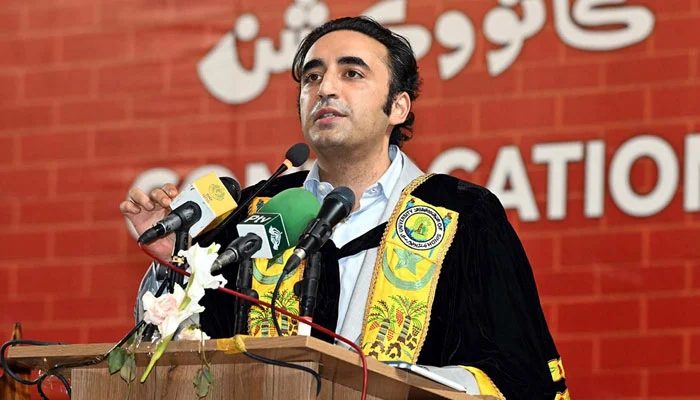
Bilawal Bhutto Zardari represents more than just a political figure; he embodies the potential of a new political generation. His public persona is intrinsically linked to youth, dynamism, and progressive thinking.
By Junaid Qaiser
In the dynamic landscape of Pakistani politics, the Pakistan Peoples Party (PPP) stands at a critical juncture. The traditional hierarchical structures that have long defined political organizations are being challenged by a powerful, emerging narrative: the urgent need for youthful representation and innovative leadership.
In a recent opinion piece, I passionately called on the Pakistan Peoples Party (PPP) to champion younger leadership, especially in Punjab, advocating for a generational shift in political representation. I urged the party to elevate the role of the youth. While I highlighted several promising young leaders by name, I recognize that many others with equal potential were inadvertently omitted, and I sincerely apologize to them.
Bilawal Bhutto Zardari represents more than just a political figure; he embodies the potential of a new political generation. His public persona is intrinsically linked to youth, dynamism, and progressive thinking. However, the true test of his leadership lies not just in his individual capabilities, but in his ability to nurture and elevate other young talents within the party.
It is a welcome development that Chairman Bilawal Bhutto Zardari approved the reorganization of the student and youth wings during his meeting with young leaders on Tuesday.
My article underscored the importance of positioning Chairman Bilawal Bhutto Zardari as a young, dynamic leader who is surrounded by emerging talents instead of being primarily flanked by veteran members. I suggested a roster of promising leaders—names like Ali Haider Gilani, Ali Qasim Gillani, Ali Musa Gillani, Faisal Mir, Barrister Aamir Hassan, Sehar Kamran, Jahan Ara Wattoo, Malaika S Raza, Faiza Malik, Sania Kamran, Nayab Gohar Jan, among others—who embody the vibrant energy our party urgently needs. Showcasing these talents will not only inspire current young leaders but will also draw fresh blood into our ranks.
I argue that the PPP must break away from traditional hierarchical patterns and create inclusive spaces for young politicians. "Only with such measures will young people join the party," I wrote, "and the party will be able to strengthen in central Punjab and secure victory in the upcoming elections."
The current organizational culture in central Punjab poses a significant challenge, resembling an exclusive "friends club." A select few gain preferential access to party leadership, with meetings and photo opportunities confined to a narrow circle. As a result, many talented young politicians are inadvertently marginalized and left without the opportunities they deserve.
I firmly believe that Chairman Bilawal Bhutto Zardari is not only a young leader but also a true embodiment of youthful spirit. His public image—built on dynamism and fresh perspectives—serves as an inspiration to the new generation. It is my hope that in future ceremonies held in Lahore and throughout Punjab, Chairman Bilawal will be accompanied by emerging young leaders rather than predominantly by older figures.
In a recent WhatsApp discussion, Hamid Nawaz Awan, a young politician from the Sargodha Division known for his humanist and progressive views, pointed out that our party’s talented youth from smaller cities also deserve recognition. I wholeheartedly agree. The party must extend its platform beyond Lahore and include emerging leaders from all corners of Punjab. This inclusivity is vital for strengthening our base in central Punjab and paving the way for electoral success.
At its core, my message is a call for organizational transformation: local leadership must move beyond personal preferences and petty egos to create a dynamic, representative political environment that attracts and retains young talent.
As the political landscape continues to evolve, my reflections offer both a critique and a potential roadmap for rejuvenating our party’s leadership and representation. I am particularly concerned about the emergence of an exclusive "friends club" in central Punjab, where a select few consistently enjoy preferential access to meetings with Chairman Bilawal Bhutto Zardari, with their images widely circulated. Such practices risk alienating many capable young voices. To strengthen our party and secure a decisive electoral victory, local leadership must rise above personal biases and petty egos, embracing a more open and inclusive culture.
These reflections are a passionate plea for reform—a call to infuse innovative ideas and progressive thinking into the very core of our party. Youthful energy is not merely an ideal; it is essential if we are to remain relevant and connected to the aspirations of our people. As we approach a pivotal electoral moment, I firmly believe that only by broadening our representation and championing the talents of the next generation can the PPP rejuvenate its ranks and truly serve the masses.
The next elections are not just a political contest but an opportunity to reimagine political representation. By championing young leaders, we are not just changing a party's composition—we are signaling a broader societal shift towards more inclusive, dynamic governance.
Our path forward is clear: welcome the voices of tomorrow, break the old molds, and create a political environment that truly reflects the aspirations of our diverse, dynamic society.
The future of the Pakistan Peoples Party Punjab—and indeed, of Pakistani politics—depends on its ability to listen, adapt, and empower the next generation of leaders.
Let us move forward together, break the old molds, and welcome the vibrant voices of tomorrow.
No comments yet.