
PPP's Leadership Shows Path Forward Through Inclusive Easter Messages
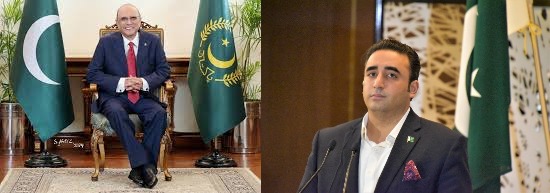
In their Easter messages, President Zardari and Chairman Bilawal have articulated a vision of Pakistan as a country strengthened rather than threatened by its diversity.
By Junaid Qaiser
As Easter celebrations unfold across Pakistan today, the messages extended by President Asif Ali Zardari and PPP Chairman Bilawal Bhutto Zardari represent more than mere seasonal pleasantries. Their statements provide a valuable window into how Pakistan's leadership approaches religious diversity and minority inclusion at a critical moment in the nation's development.
President Zardari's Easter message emphasizes several crucial themes that deserve our attention. First, he deliberately frames Easter through its universal values—"compassion, sacrifice, and forgiveness"—creating a bridge between religious traditions rather than emphasizing differences. This approach acknowledges the holiday's Christian significance while making its moral teachings accessible to all Pakistanis, regardless of faith background.
More significantly, the President's explicit reference to constitutional protections for minorities represents an important recommitment to Pakistan's founding principles. By linking Easter greetings to constitutional guarantees, President Zardari elevates what could have been a routine holiday message into a reaffirmation of the state's responsibility toward all citizens.
President Zardari emphasizes what should be self‑evident in any democracy: “Our Constitution guarantees the rights of minorities.” Those words carry weight, given Pakistan’s complex religious tapestry. Yet, constitutional promise alone is insufficient without genuine political will. By pledging continued work for “the uplift and empowerment of all minorities,” the President not only reaffirms legal protections but signals a readiness to translate paper guarantees into tangible progress—in education, healthcare, and public service.
The President's acknowledgment of Christian contributions to Pakistan's development in education, healthcare, and public service is particularly noteworthy. This recognition challenges the marginalizing narratives that have too often rendered minority communities invisible in national conversations about Pakistan's progress and identity. By explicitly naming these contributions, Zardari's message pushes against the tendency to view religious minorities as passive recipients of tolerance rather than active builders of the nation.
PPP Chairman Bilawal Bhutto Zardari's complementary message strengthens these themes while adding important historical context. His reference to Pakistan's Christians as "an integral part of the rich and diverse fabric of our nation" frames diversity not as a modern challenge to be managed but as a foundational reality of Pakistani nationhood.
Chairman Bilawal Bhutto Zardari ties these Easter greetings to the Pakistan People’s Party’s storied commitment to minorities. Invoking the legacies of Zulfiqar Ali Bhutto and Benazir Bhutto, he reminds us that the PPP has long stood for “inclusion, interfaith harmony and social justice.” This historical continuity is crucial: it frames minority rights not as special favors but as intrinsic to the party’s—and by extension, the nation’s—identity.
The younger Bhutto-Zardari's invocation of the PPP's historical lineage—from Shaheed Zulfikar Ali Bhutto through Shaheed Benazir Bhutto to the present leadership—serves to position minority inclusion not as a novel policy direction but as a continuation of his party's long-standing commitments. This historical framing is powerful, suggesting that respect for religious diversity represents not a departure from Pakistani tradition but fidelity to its best impulses.
Both messages gain additional significance against the backdrop of challenges that religious minorities, including Pakistan's Christian community, continue to face. While Easter messages necessarily focus on hope and celebration, they implicitly acknowledge that the work of building a truly inclusive society remains ongoing. The gap between constitutional ideals and lived realities for many minority citizens requires precisely the kind of "collective efforts" that the PPP Chairman calls for.
What makes these statements particularly valuable is their emphasis on the mutually reinforcing relationship between national unity and respect for diversity. Rather than presenting minority rights as somehow in tension with national cohesion, both leaders frame inclusion as essential to Pakistan's stability and progress. Their messages suggest that a Pakistan where Christians and other minorities thrive is not just better for those communities but stronger as a nation.
As Pakistan navigates complex regional and internal challenges, these Easter messages hint at a vision of national identity spacious enough to embrace religious difference while maintaining a coherent sense of shared purpose. The emphasis on interfaith harmony, mutual respect, and equal citizenship offers a constructive alternative to exclusionary nationalism that has proven so destructive elsewhere.
The true test of these commitments, of course, will come through policy implementation and protection of vulnerable communities throughout the year, not just during religious holidays. Nevertheless, in a global context where religious differences are too often exploited for political gain, the thoughtful Easter messages from Pakistan's leadership represent a welcome counterexample—one that deserves recognition and reinforcement.
In their Easter messages, President Zardari and Chairman Bilawal have articulated a vision of Pakistan as a country strengthened rather than threatened by its diversity. This Easter season offers an opportunity for all Pakistanis to reflect on how that inclusive vision might be more fully realized in the months and years ahead.
Both President Zardari and Chairman Bilawal conclude with a call to “promote tolerance, mutual respect, and interfaith harmony.” This is more than seasonal goodwill—it’s a roadmap for national cohesion. As Pakistan grapples with economic pressures and regional tensions, our greatest strength lies in unity forged through respect for each other’s beliefs and contributions.
Very Nice 👍