
NA-127 – The Key to PPP's Revival in Punjab
Lahore is the heart of Punjab’s politics. Winning here isn’t just about a seat—it’s about sending a message
By Junaid Qaiser
My recent analysis of the NA-127 constituency "The Road Through NA-127: PPP's Journey Back to Political Relevance in Punjab" has generated considerable discussion within political circles. Numerous colleagues, friends, and political journalists have engaged with me about these observations, leading to some valuable insights about the Pakistan Peoples Party's strategic options in Punjab.
A consensus appears to be forming around a crucial point: if the Pakistan Peoples Party genuinely aims to rebuild its political presence in Punjab, it must first establish a strong foothold in Lahore, the province's political and cultural center. Rather than dispersing limited resources across multiple constituencies, the party would benefit from adopting a focused approach by selecting one specific Lahore constituency to serve as a demonstration of its renewed political strategy.
This "model constituency" approach would involve concentrating the party's organizational capabilities, leadership attention, and grassroots mobilization efforts within a single electoral district. By treating this constituency as a laboratory for political revival, the PPP could develop and refine effective campaign methodologies, strengthen local party structures, and cultivate deep connections with voters. Success in this targeted constituency during upcoming elections would then serve as both proof of concept and a foundation upon which broader provincial expansion could be built.
Such a victory would resonate beyond mere numerical representation in the assembly—it would signal a meaningful shift in Punjab's political landscape and demonstrate that the PPP remains a viable electoral force in Pakistan's most populous province. This strategic consolidation in Lahore could ultimately provide the momentum necessary for the party to reclaim its historical significance in Punjab politics.
While securing parliamentary representation from divisions such as Sahiwal, Faisalabad, Sargodha, Gujranwala, or Rawalpindi would certainly mark progress for the Pakistan Peoples Party, these victories would pale in comparison to the profound impact of winning an electoral contest within Lahore city itself. Lahore occupies a unique position in Punjab's political landscape—it functions as both the provincial capital and its cultural heart, making it a symbolic prize that transcends mere numerical representation.
The significance would be magnified exponentially if a member of the party's core leadership were to secure this victory. Such an outcome would represent more than just gaining a single National Assembly seat; it would constitute a powerful political statement about the party's renewed relevance and electoral viability in urban Punjab. This achievement would carry psychological weight that resonates throughout the province's political ecosystem.
A leadership victory in Lahore would generate substantial media coverage, energize the party's support base, and potentially alter voter perceptions across Punjab. It would demonstrate that the PPP can successfully challenge entrenched political forces in their traditional strongholds. Furthermore, this breakthrough could serve as the cornerstone for a broader provincial revival strategy, providing both momentum and a practical template for electoral success that could be adapted to other constituencies.
The historical significance of Lahore in Punjab's political narrative means that electoral outcomes in the city often foreshadow broader provincial trends. By establishing a meaningful presence in Lahore, the PPP would position itself to reclaim its once-formidable standing throughout Punjab—reconnecting with its historical legacy while simultaneously presenting itself as a forward-looking alternative in contemporary Pakistani politics.
The selection of NA-127 as a priority constituency for the Pakistan Peoples Party's revival strategy in Punjab is supported by compelling historical precedent and recent electoral patterns that demonstrate its unique potential.
This constituency carries significant historical importance for the party, beginning with Shaheed Zulfikar Ali Bhutto himself, who contested elections from this very constituency. This historical connection creates a narrative thread that links the party's founding principles to its contemporary aspirations. The constituency further proved its receptiveness to PPP ideology when Khawaja Tariq Rahim secured victory here on a PPP ticket during the 1988 elections, establishing a precedent for party success in this area.
The constituency has demonstrated consistent political fluidity and openness to alternatives to mainstream parties. Dr. Tahir-ul-Qadri's victory against the Pakistan Muslim League-Nawaz candidate illustrates that voters in this district have historically been willing to support candidates who offer a compelling alternative vision. During those same elections, the PPP's Professor Mian Ijaz-ul-Hassan garnered a substantial vote share, reinforcing the presence of a significant base of support for the party's platform.
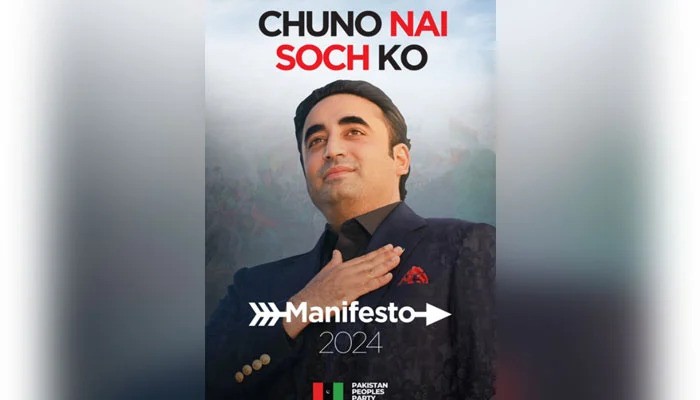
More recently, in by-elections, former Lahore President Aslam Gill accumulated over 33,000 votes—a notable achievement that signals ongoing support for the party despite changing political dynamics. This continuity of support reached its contemporary peak in the 2024 general elections when Chairman Bilawal Bhutto Zardari secured the highest vote count among all PPP candidates across Lahore's constituencies, demonstrating that NA-127 remains the party's strongest potential foothold in the provincial capital.
The electoral process in NA-127 during the 2024 elections raised significant transparency concerns. The delayed announcement of results generated legitimate questions about the integrity of the electoral process. During her press conference following the elections, PPP Vice-President Senator Sherry Rehman articulated serious concerns about irregularities specific to this constituency. She highlighted troubling procedural anomalies—noting that the party was denied Form 45 until 10 PM on election day and that representatives were prevented from meeting with the returning officer.
Senator Rehman specifically raised concerns about the handling of Chairman Bilawal Bhutto Zardari's votes, suggesting potential manipulation in the tallying process. She questioned why results for NA-127 were uniquely delayed when other constituencies reported promptly, and noted that PPP representatives were removed from the returning officer's office after results from 85 polling stations had been collected. Despite filing 23 formal complaints regarding irregularities in NA-127, the party received no meaningful response from election authorities.
Throughout this challenging process, Senator Rehman emphasized that Chairman Bilawal Bhutto Zardari maintained his characteristic grace and democratic commitment—calling not for conflict but simply for transparency and adherence to constitutional processes. This approach reflects the party's fundamental commitment to democratic principles even when facing potentially disadvantageous circumstances.
As a resident of NA-127, I possess intimate knowledge of this constituency's political dynamics and demographic composition. My longstanding connection to this constituency has afforded me comprehensive understanding of voter sentiments, including the notable presence of a substantial anti-Nawaz voting bloc that could be strategically mobilized in future electoral contests.
During Chairman Bilawal Bhutto Zardari's campaign for this constituency, I worked closely with Malaika Raza, who serves as General Secretary of the People's Party Human Rights Cell, to establish a comprehensive electoral office. This strategic office functioned as the operational office for campaign activities, voter outreach initiatives, and tactical planning throughout the election period.
Following the announcement of results, I received a phone call from Senator Sehar Kamran, who had been deeply involved in campaign operations. She specifically sought my assessment regarding factors contributing to the electoral outcome. I provided her with a thorough analysis of the various elements that influenced the results, examining both internal organizational aspects and external political dynamics at play within the constituency.
Senator Kamran found considerable value in my analytical framework and requested that I formalize these observations into a comprehensive written report. Upon reviewing my detailed assessment, she expressed particular appreciation for the depth of analysis and recommended that I forward this document directly to Chairman Bilawal Bhutto Zardari. Following her guidance, I transmitted the report to the Chairman through direct messaging channels.
Subsequently, when the President of People's Party Central Punjab Raja Pervaiz Ashraf established a specialized three-member Fact-Finding committee on examining NA-127's electoral outcome, I was invited to assist the committee. Throughout the committee's deliberative process, I provided continuous analytical support and shared my firsthand observations of constituency-specific factors. This collaborative engagement with the official review mechanism has equipped me with comprehensive understanding of both the challenges and opportunities present in this critical constituency. Having served as an assistant to the three‑member committee, I’m familiar with many of the facts.
My participation in the committee's deliberations provided me with a multidimensional understanding of the constituency that combines statistical analysis with ground-level political realities. This comprehensive perspective informs my conviction that NA-127 represents a uniquely promising opportunity for the party's revival strategy in Punjab.
Through these multiple layers of engagement—as a resident, campaign participant, analyst, and committee transcriber—I have developed nuanced insights into the distinctive characteristics that make NA-127 particularly significant for the party's strategic considerations in Punjab.
The combination of historical connection, demonstrated voter support, and the questions surrounding recent electoral outcomes makes NA-127 the optimal focus for PPP's strategic efforts to rebuild in Punjab. The constituency represents both symbolic importance and practical potential—a place where focused organizational work could most effectively translate into electoral success that would reverberate throughout the province.
For the PPP to succeed in NA-127, it must implement a comprehensive, sustained strategy that extends beyond the typical election-focused activities. This approach should include:
- Establishing a permanent presence in the constituency through community centers that address local concerns and provide services to residents
- Developing a deep understanding of the constituency's demographic composition and tailoring messaging to address specific concerns of different voter segments
- Cultivating local leadership that maintains a consistent connection with constituents between election cycles
- Highlighting the historical connection between the Bhutto family and the constituency to evoke emotional resonance
- Addressing the specific grievances identified in the post-election analysis
The PPP's journey back to political prominence in Punjab hinges on symbolic victories that can change the narrative around the party's electoral viability. NA-127 represents not just a potential parliamentary seat but a psychological barrier that, once breached, could redefine the political landscape of Punjab. By concentrating resources, leadership attention, and organizational efforts on this constituency, the PPP can create a model for success that could be replicated across other areas.
The road to revival will require patience, persistence, and strategic thinking. The historical patterns, combined with recent electoral indicators, suggest that NA-127 offers the most promising path forward. This constituency could indeed become the cornerstone upon which the PPP rebuilds its once-formidable presence in Punjab politics.
You've done the best analysis. The Pakistan Peoples Party has been abused in this constituency. I myself also went several times in this constituency. But with apologies I would say that the interest of the local leadership in this constituency was just to some extent