
Hope's Architect: Bilawal Bhutto Zardari and the Reconstruction of Pakistan's Promise
His recent negotiations with Prime Minister Shahbaz Sharif reveal not just political astuteness but a profound understanding of what national cohesion truly demands.
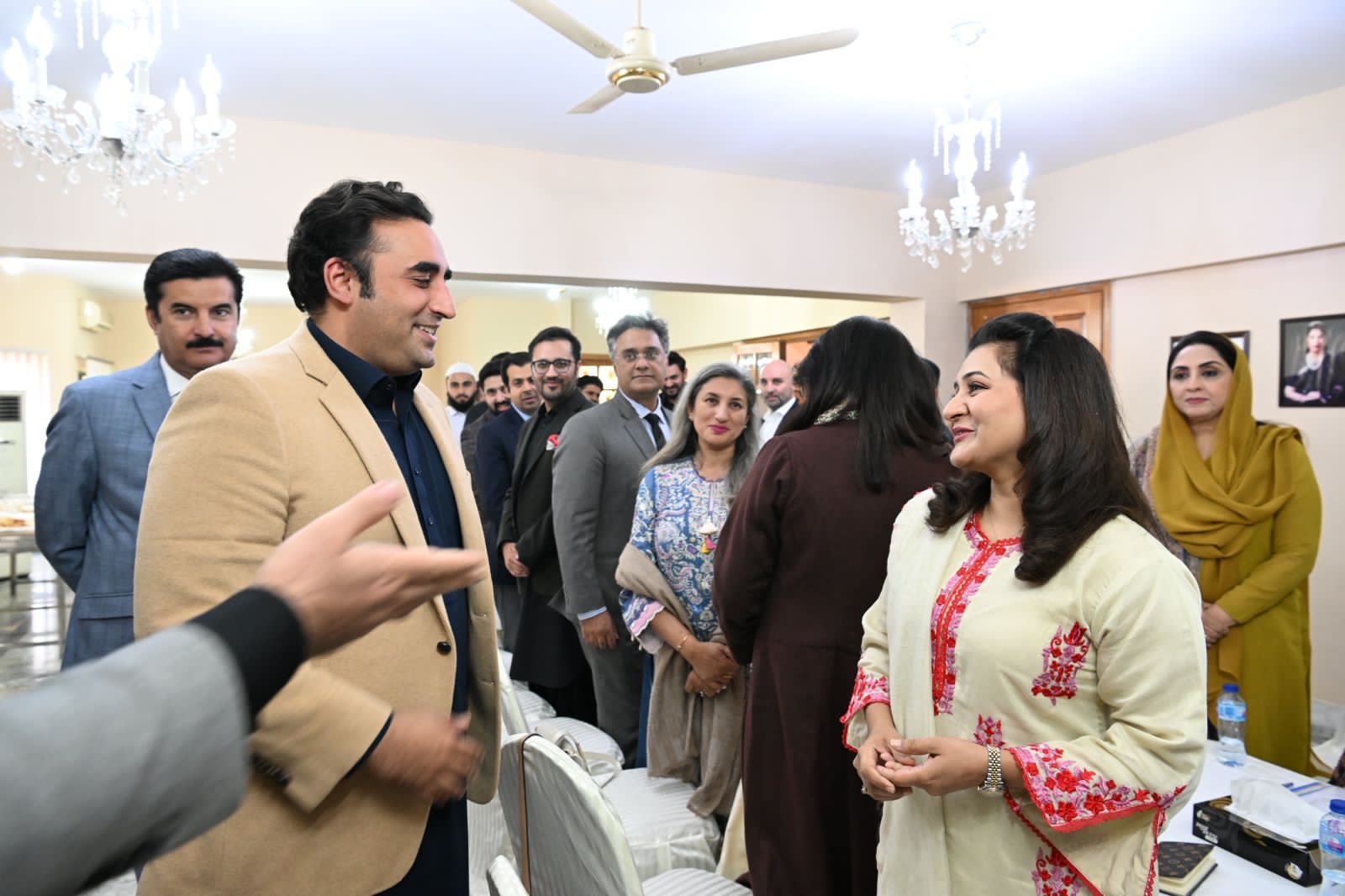
By Sania Kamran
In the intricate tapestry of Pakistan’s political landscape, Bilawal Bhutto Zardari emerges not just as a leader but as a symbol of hope for the nation’s youth—a generation yearning for change, progress, and a future unshackled from the burdens of the past. At the forefront of this awakening stands Bilawal Bhutto Zardari, whose recent insistence on provincial consensus for all water distribution projects has not only advanced a critical policy principle but also crystallized his role as a leader of youth, a harbinger of unity, and an architect of Pakistan’s prosperous tomorrow.
From the very outset of his political journey, Bilawal Bhutto Zardari has carried the weight of a storied legacy: the democratic fervor of his grandfather, Shaheed Zulfikar Ali Bhutto; the unyielding courage of his mother, Shaheed Benazir Bhutto; and the aspirations of millions who see in him a living bridge between the past and the future. Yet it was his recent stand—declaring that no canal or dam may move forward without the explicit consent of every province—that transformed legacy into living leadership. In high-level meetings with Prime Minister Shahbaz Sharif, Bilawal’s voice rang clear: true federal strength is born not of unilateral projects, but of shared ownership and respect for provincial autonomy.
When young Bilawal declared that no canal projects would proceed without complete provincial consensus, he spoke not merely as the PPP Chairman but as the voice of a generation tired of divisive politics. In an era where Pakistan's demographic dividend hangs in precarious balance—with nearly two-thirds of the population under 30—this commitment to collaborative governance represents exactly what the youth crave: leadership that unifies rather than divides.
For Pakistan’s youth—whose hopes are often tempered by political uncertainty and economic hardship—this moment represents more than a policy breakthrough. It signals a new era in which their voices, too, are woven into the fabric of national decision-making. When every province sits at the table as an equal partner, the process itself becomes a classroom in compromise, collaboration, and collective progress. In championing this principle, Bilawal has shown that the vigor of youth need not clash with the wisdom of experience; instead, it can revitalize institutions and chart a course toward sustainable development.
The shadow of past controversies—most notably the long-stalemated Kalabagh Dam debate—has served as a reminder of what happens when regions feel unheard. Bilawal’s approach, by contrast, is anticipatory rather than reactive: by insisting on consensus now, he forestalls the fractures that have, in times past, threatened to splinter the federation. It is a lesson in foresight that resonates particularly with young Pakistanis, who look to leaders not only for bold rhetoric but for tangible mechanisms that safeguard equity and unity.
Yet Bilawal Bhutto Zardari’s vision extends beyond domestic horizons. His outspoken condemnation of recent Indian posturing on the Indus Waters Treaty underscores a comprehensive grasp of water security as a linchpin of national sovereignty. By pledging to raise the issue at every international forum and to craft a vigorous counter-strategy, he has demonstrated that the hope he inspires is not confined within our borders but resonates on the world stage—where Pakistan’s stakes in water, agriculture, and climate resilience are inextricably linked to regional stability.
This dual strategy—nurturing internal harmony while projecting steadfast resolve externally—epitomizes statesmanship in its purest form. It is the very kind of leadership that Pakistan’s youth crave: bold enough to challenge the status quo, inclusive enough to uplift every voice, and visionary enough to lay the groundwork for an era of development and prosperity. Under Bilawal’s stewardship, the Pakistan Peoples Party emerges not merely as a political organization but as a crucible for national unity, a forum where diverse aspirations converge to shape policy that serves all Pakistanis.
The youth of Pakistan, often relegated to spectators in their own national drama, have found in Bilawal a champion who understands that their future cannot be built upon the fractured foundations of provincial discord. His insistence on mutual agreement as a prerequisite for water projects demonstrates a maturity that transcends his years—a quality that has increasingly drawn young Pakistanis to see themselves reflected in his approach.
For a generation impatient for progress, Bilawal Bhutto Zardari offers a compelling narrative: one where respect for provincial rights becomes the engine of growth, where dialogues replace deadlocks, and where Pakistan’s inherent diversity is celebrated as its greatest asset. In his call for consensus, young men and women find affirmation that their concerns will matter; in his defense of the Indus, they see a protector of their inherited resources; in his very presence, they discern a leader who speaks their language of hope.
"The future belongs to those who prepare for it today," Malcolm X once said, and Bilawal's foresight in preventing potential water conflicts embodies this wisdom. For Pakistan's youth, struggling with unemployment and environmental degradation, his proactive approach to resource management represents not just good politics but existential necessity.
As May 2 approaches, when the Council of Common Interests will enshrine this consensus principle, Pakistan stands at a crossroads. It can choose the worn path of unilateralism and division, or it can embrace a new chapter of shared responsibility and collective ambition. With Bilawal Bhutto Zardari leading the way, that choice seems clear—and the youth of Pakistan, long yearning for direction, can at last glimpse a future bright with promise.
In the annals of history, this era may well be remembered as the moment when Pakistan chose hope over despair, unity over fragmentation, and the boundless potential of its youth over the shadows of its past. Bilawal Bhutto Zardari is not just leading a party; he is illuminating a path forward, one that beckons the nation toward a horizon of peace, progress, and shared prosperity.

No comments yet.