
World Press Freedom Day Editorial: President Zardari and Chairman Bilawal Reaffirm Their Commitment to Press Liberty
Chairman Bilawal pointed out that President Zardari himself has maintained unwavering support for media liberalization despite having been subjected to what he described as "one of the most venomous media trials in Pakistan's history."
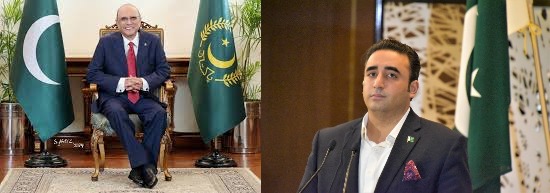
On this World Press Freedom Day 2025, both President of Pakistan Asif Ali Zardari and PPP Chairman Bilawal Bhutto Zardari have delivered powerful messages underscoring the vital importance of press freedom in Pakistan's democratic landscape. Their statements reflect a deep understanding of journalism's role not merely as a profession but as an essential pillar supporting democratic values.
President Zardari emphasized that press freedom in Pakistan is not just an ideal but a constitutional right guaranteed under Article 19, acknowledging the indispensable role media plays in promoting dialogue, exposing corruption, and advocating for marginalized communities. However, he candidly recognized that despite government efforts to protect journalists, significant work remains to create a truly safe and enabling environment for media professionals.
The President's message comes at a critical time when journalism faces unprecedented challenges globally. His acknowledgment of journalists who have lost their lives in conflict zones like Gaza and Palestine demonstrates an awareness of the dangerous conditions many reporters face in pursuit of truth.
Chairman Bilawal Bhutto Zardari contextualized press freedom within his party's historical legacy, noting that the Constitution of 1973—with its guarantees of free speech and press—was established under the leadership of his grandfather, Shaheed Zulfikar Ali Bhutto. He further highlighted the steadfast commitment to press freedom shown by his mother, Shaheed Mohtarma Benazir Bhutto, even during periods of dictatorship.
Most notably, Chairman Bilawal pointed out that President Zardari himself has maintained unwavering support for media liberalization despite having been subjected to what he described as "one of the most venomous media trials in Pakistan's history." This personal experience adds weight to the President's commitment to press freedom.
The PPP Chairman's call for "immediate and concrete steps" to ensure journalist safety isn't mere rhetoric. He specifically highlighted the PPP-led Sindh Government's groundbreaking legislation—the Sindh Protection of Journalists and Other Media Practitioners Act, 2021—as a model for protecting media professionals. This represents one of the most significant legislative achievements for press freedom in Pakistan's recent history.
President Zardari similarly urged media organizations to maintain high professional standards while acknowledging the increasingly complex media landscape characterized by fake news and disinformation. This balanced approach recognizes both the rights and responsibilities inherent in press freedom.
Particularly forward-thinking is Chairman Bilawal's recognition that press freedom must evolve to address contemporary challenges. His acknowledgment that modern press includes "bloggers, vloggers, and citizen journalists" demonstrates an understanding that press freedom principles must extend across all platforms, including protection against online harassment and algorithmic bias.
Both leaders have effectively issued a call to action. President Zardari urged continuous government work to protect press freedoms while hoping media will educate the public on issues of national and global significance. Chairman Bilawal directly called upon federal and provincial governments to implement concrete measures for journalist protection.
The complementary messages from these two leaders—representing both the presidency and party leadership—signals cohesive policy priorities regarding press freedom. Their statements reflect a sophisticated understanding that a free press serves not merely as a constitutional right but as an essential mechanism for governmental accountability and informed civic participation.
As Pakistan navigates complex national and regional challenges, this renewed commitment to press freedom represents a promising acknowledgment that democracy functions best when citizens have access to reliable information and when journalists can pursue truth without fear or favor.
No comments yet.