
Government is focusing on growth oriented policies: Haroon Akhtar Khan
Government is focusing on growth oriented policies: Haroon Akhtar Khan
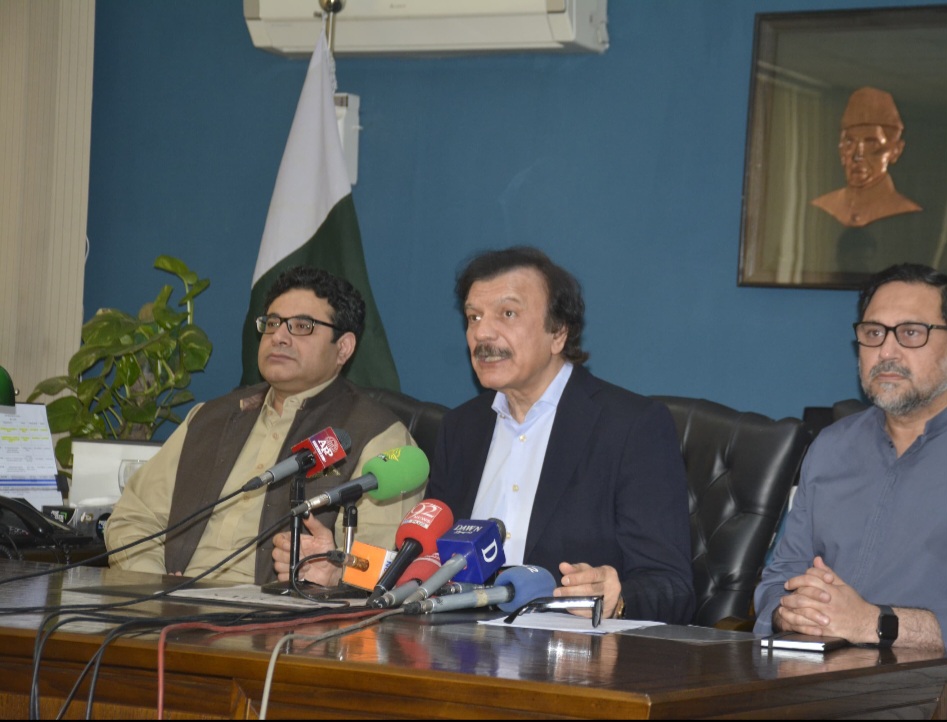

LAHORE: Haroon Akhtar, Special Assistant to the Prime Minister on Industry and Production, outlined the government’s economic roadmap on Saturday emphasizing a shift from stabilization to growth-oriented policies in the upcoming budget.
Akhtar reiterated Prime Minister Shehbaz Sharif’s vision of “inclusive progress” by engaging all stakeholders and minimizing bureaucratic intervention across sectors.
He was addressing the consultative session on Federal Budget 2025- 26 organised by Federal of Pakistan Chambers of Commerce and Industry ( FPCCI) regional office.
Akhtar highlighted the critical role of small and medium enterprises (SMEs), calling them the “lifeline of industry,” and vowed targeted support to bolster their productivity. He confirmed that the previous budget focused on economic stabilization, while the upcoming budget will prioritize development, export promotion, and industrial revival.
To boost exports, the government plans to position exporters in an “ideal position” through strategic measures, with special attention on expanding shipments of halal meat, dairy products, mangoes, onions, and citrus fruits. Tax incentives for electric vehicles and efforts to revive closed industries were also announced as part of the strategy to stimulate manufacturing and job creation.
Regarding sustainable energy, Akhtar revealed that a proposal to produce biogas from manure is under consideration, which could significantly reduce petroleum import costs. “Expert input will guide policy decisions to ensure efficiency and competitiveness,” he added, stressing the government’s commitment to a private-sector-led growth model.
Speaking on the occasion Saqib Fayaz Magoon, FPCCI’s Senior Vice President, underscored the critical role of pre-budget proposals, lamenting that past recommendations had yielded limited implementation despite their importance. He emphasized that this year’s proposals were crafted with IMF conditions in mind, stressing the need for long-term industrial policies to ensure sector stability. “Industries are built for lifetimes, not just 5 or 10 years,” he asserted, calling for cross-party consensus to insulate economic and industrial policies from political changes.
Magoon criticized structural flaws in the Export Fiance Scheme (EFS), citing its adverse impact on ginning and spinning sectors, where 50% of units have reportedly shut down. He urged the immediate abolition of the 18% sales tax on local industries under EFS and advocated for a review of energy tariffs to alleviate production costs. Highlighting bureaucratic inefficiencies, he demanded that the Federal Board of Revenue (FBR) consult stakeholders before issuing Statutory Regulatory Orders (SROs), which he deemed “unworkable” in their current form. He also proposed reducing the 4% sales tax burden on unregistered businesses to broaden the tax net.
Zain Iftikhar, FPCCI’s Regional Chairman, called for shifting focus to agriculture, terming it the “backbone” of Pakistan’s economy. He highlighted systemic challenges faced by farmers, including inadequate crop prices, which he claimed deprive them of resources for future cultivation. Iftikhar called for abolishing the 17% sales tax on seeds and reducing GST on fertilizers, whose prices have surged by 250% since 2020. He pushed for lower electricity tariffs for tube wells, increased adoption of modern agricultural technology, and tax cuts on diesel, which is predominantly used in farming. To support smallholders, he urged the federal government to introduce interest-free loans for farmers.
Earlier, Special Assistant to the Prime Minister for Industries and Production, Haroon Akhtar Khan, introduced the Prime Minister’s SME Development Vision during a media talk at the Small and Medium Enterprises Development Authority (SMEDA) office today, ahead of the SMEDA Board of Directors’ meeting. He was accompanied by Federal Secretary for Industries and Production, Saif Anjum, and SMEDA's Chief Executive Officer, Suqrat Aman Rana.
Haroon Akhtar Khan stated that the Prime Minister considers the SME sector as the key to economic development and aims for Pakistani SMEs to compete with their counterparts in global markets. To achieve this goal, global SME experts are being hired due to their international experience, which will allow them to implement world-class development initiatives for Pakistani SMEs. He further mentioned that a plan in this regard will be finalized in today’s SMEDA Board meeting.
He emphasized that, in line with the Prime Minister’s vision, the Ministry of Industries and Production, through SMEDA, is taking special measures for the development of youth, women, and informal SMEs. These measures include facilitating financing, providing training, preparing business feasibility studies, offering easy access to finance, and providing tax incentives. These practical steps will be visible in the upcoming budget.
Haroon Akhtar Khan also informed that, following the Prime Minister's directive, the definition of SMEs has now been expanded to include micro-enterprises. As a result, businesses with an annual turnover of less than 30 million rupees will now be able to benefit from the privileges and facilities available to SMEs. He pointed out that millions of small businesses are currently operating within households across Pakistan but remain hidden from the formal economy and are unregistered. These businesses are neither growing themselves nor contributing to national development. He assured that the government will soon offer incentives to bring these informal businesses into the formal economy.
In response to a question about cryptocurrency, Haroon Akhtar Khan stated that a prominent global crypto expert has been hired, and a formal policy regarding cryptocurrency will be introduced soon. He added that Pakistan's youth has found excellent opportunities in the IT sector, and the government is working to expand technical institutions to equip young people with modern technical skills. This will increase Pakistan’s skilled labor force and enable the country’s SME sector to provide globally competitive products in export markets.
No comments yet.